Moving to Alaska is unlike relocating anywhere else in the United States.
Whether you’re heading to Anchorage for a new job, relocating with the military, starting a business, or simply looking for a different lifestyle, moving to the Last Frontier requires more planning than a typical interstate relocation. Longer transportation routes, limited road access to some communities, changing weather conditions, and unique shipping logistics all influence how your move should be planned.
If you’re searching for a comprehensive moving to Alaska guide, understanding the transportation process before moving day can save both time and unnecessary stress.
At Hercules Moving Solutions, we coordinate long-distance relocations through a trusted network of licensed and experienced moving carriers across the country. We help customers plan complex long-distance moves by connecting them with reputable transportation providers and helping them prepare for every stage of their relocation.
In this guide, you’ll learn how to move to Alaska, explore different transportation methods, understand the cost of moving to Alaska, and discover practical Alaska relocation tips that can help make your transition as smooth as possible.
Why Moving to Alaska Is Unlike Any Other Relocation in America
Moving from one state to another is already a significant undertaking, but Alaska presents challenges that most interstate moves simply don’t involve.
Although Alaska is part of the United States, its geography creates transportation logistics that differ considerably from moves within the Lower 48.
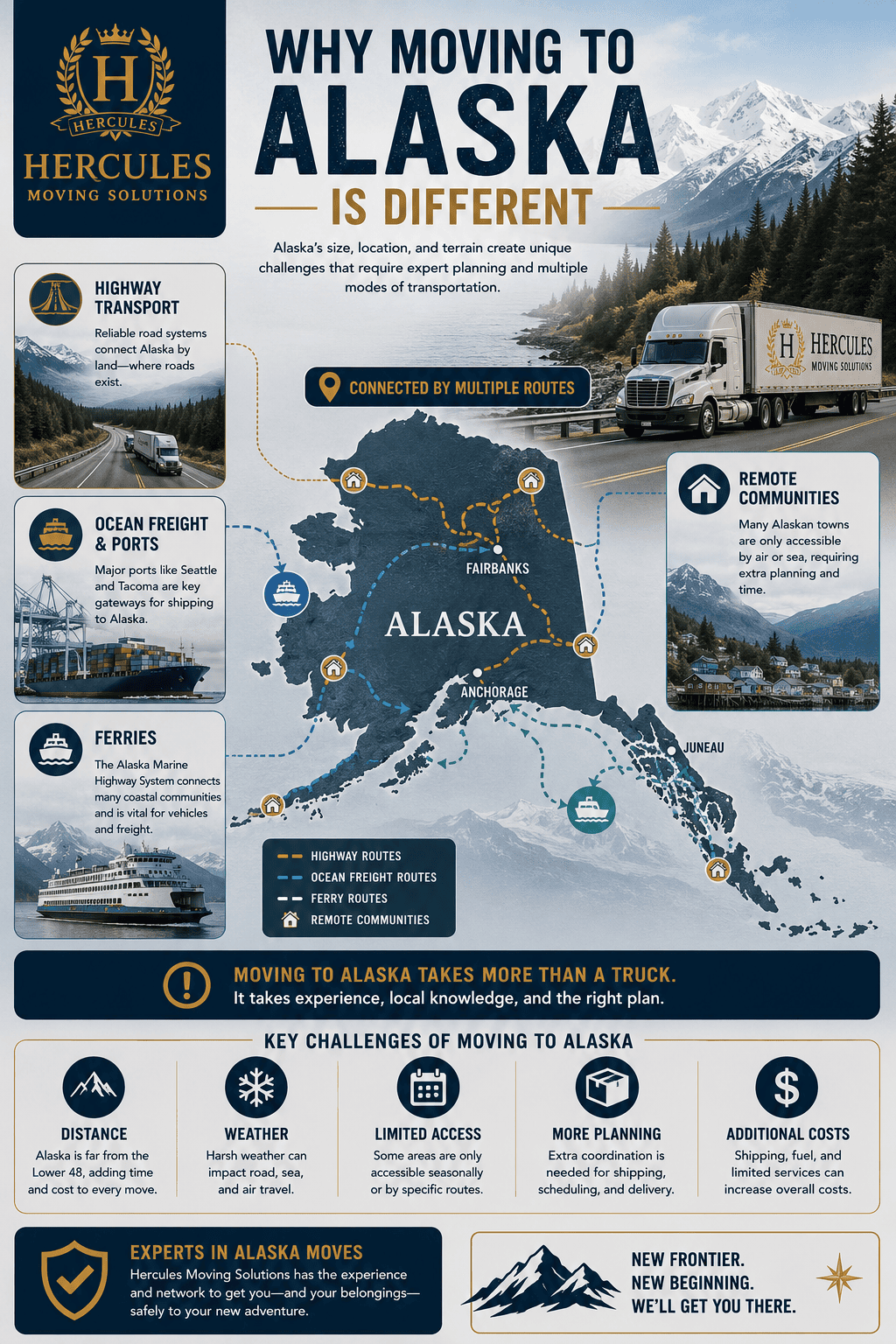
Depending on your destination, your household goods may travel by:
- Highway
- Ferry
- Ocean freight
- Multiple transportation methods combined
This makes planning especially important.
Alaska’s geography changes everything
Unlike most states, Alaska is separated from the contiguous United States by Canada.
Many communities have limited highway access, while others are accessible only by:
- Ferry
- Cargo ship
- Air transportation
Because of these logistical realities, transportation schedules often require more flexibility than standard interstate moves.
Longer transit times
Most long-distance moves within the continental United States follow predictable highway routes.
Alaska shipments frequently involve:
- Long highway transportation
- Cross-border travel
- Port operations
- Ocean freight scheduling
- Weather-related adjustments
As a result, delivery timelines may differ from those of traditional cross-country moves.
Planning ahead helps reduce uncertainty and gives you greater flexibility when coordinating housing and travel.
Weather plays a larger role
Alaska experiences diverse weather conditions throughout the year.
Depending on the season and destination, transportation may be affected by:
- Snow
- Ice
- Heavy rainfall
- Mountain conditions
- Limited daylight during winter
Professional movers plan for seasonal conditions, but homeowners should also allow additional flexibility in their moving schedules.
Some communities require additional planning
While cities such as Anchorage and Fairbanks are connected to the highway system, many Alaskan communities are not.
Relocations to remote areas may involve:
- Additional freight transfers
- Regional shipping providers
- Smaller delivery vehicles
- Alternative transportation methods
Understanding your destination’s accessibility helps you build a realistic moving plan.
Downsizing often makes Alaska moves easier
Because Alaska moves generally involve longer transportation routes, many homeowners use relocation as an opportunity to simplify their household.
Before packing, consider:
- Donating unused furniture
- Selling unnecessary appliances
- Recycling unwanted items
- Disposing of broken belongings
Reducing the size of your shipment can simplify logistics and may reduce overall transportation costs.
Our blog, What to Do With Stuff You Can’t Move, offers practical ideas for deciding what to keep, donate, sell, or store before a long-distance relocation.
Planning early provides more flexibility
Unlike shorter interstate moves, Alaska relocations often require additional coordination between transportation providers.
Starting preparations six to eight weeks before moving day allows you more time to:
- Compare moving options
- Schedule transportation
- Organize paperwork
- Declutter your home
- Coordinate housing
- Plan travel arrangements
- Prepare your family
Early planning also increases your flexibility if shipping schedules need adjustment.
Driving the ALCAN Highway With Your Belongings
Many people researching how to move to Alaska wonder whether they can simply drive a moving truck to their new home.
The answer depends on your destination, your comfort with long-distance driving, and the time of year.
One possible route is the Alaska Highway, commonly called the ALCAN Highway.
Originally constructed during World War II, this route connects Canada with Alaska and remains one of the primary roadways used by travelers driving to the state.
How long is the drive?
The exact distance depends on where you’re starting and where you’re plan to settle in Alaska.
For many travelers departing from the western United States, the journey can take several days and cover thousands of miles.
Your total travel time depends on factors such as:
- Departure location
- Destination city
- Weather conditions
- Border crossing times
- Rest stops
- Road construction
Rather than rushing, most drivers plan multiple overnight stops along the way.
Border crossing considerations
Driving through Canada means crossing an international border.
Before beginning your trip, make sure you have all required documentation, including:
- Valid passport or other accepted travel documents
- Driver’s license
- Vehicle registration
- Proof of insurance
- Required documentation for pets, if applicable
Review current border requirements well before your departure, as regulations may change.
Is driving a moving truck the best option?
Driving a rental truck to Alaska may work well for some households, but it isn’t the ideal solution for everyone.
Consider factors such as:
- Driving experience
- Household size
- Seasonal weather
- Vehicle limitations
- Personal comfort with long-distance travel
Many homeowners prefer working with professional long-distance movers while traveling separately by personal vehicle or commercial flight.
This approach allows experienced transportation professionals to coordinate the shipment while you focus on arriving safely.
Prepare for remote stretches of highway
Some sections of the Alaska Highway pass through sparsely populated areas.
Drivers should prepare for:
- Longer distances between fuel stations
- Limited cell service
- Changing weather conditions
- Wildlife crossings
- Fewer repair facilities
Planning fuel stops, accommodations, and emergency supplies before departure helps make the trip safer and more comfortable.
Protect your belongings during the drive
If you’re transporting household items yourself, proper packing is especially important.
To help protect your belongings:
- Secure furniture to prevent shifting.
- Use moving blankets for large items.
- Keep fragile belongings well cushioned.
- Store valuable documents with you.
- Avoid overloading the truck.
Good packing practices reduce the likelihood of damage during the long journey north.
Professional transportation may simplify the process
Although driving the ALCAN Highway can be an unforgettable experience, it’s not the right choice for every move.
Professional movers can coordinate the transportation of your household goods while you concentrate on travel logistics, family responsibilities, and preparing for life in Alaska.
If you’re relocating from the Lower 48, our Alaska Movers, Long Distance Movers, and Cross Country Movers can help coordinate transportation through our trusted nationwide carrier network. You may also find our What to Do With Stuff You Can’t Move blog useful while preparing for your relocation.
Helpful external resources:
- The Federal Motor Carrier Safety Administration (FMCSA) Ready to Move Guide provides valuable information about consumer rights and preparing for interstate moves.
- The Alaska Department of Transportation & Public Facilities (DOT&PF) offers current information about highways, ferry services, and transportation infrastructure.
- The State of Alaska website provides helpful resources for new residents, including information about vehicle registration, driver’s licensing, and state services.
How to Choose the Right Moving Method for Alaska
One of the most important decisions you’ll make when planning an Alaska relocation is determining how your household goods will get there.
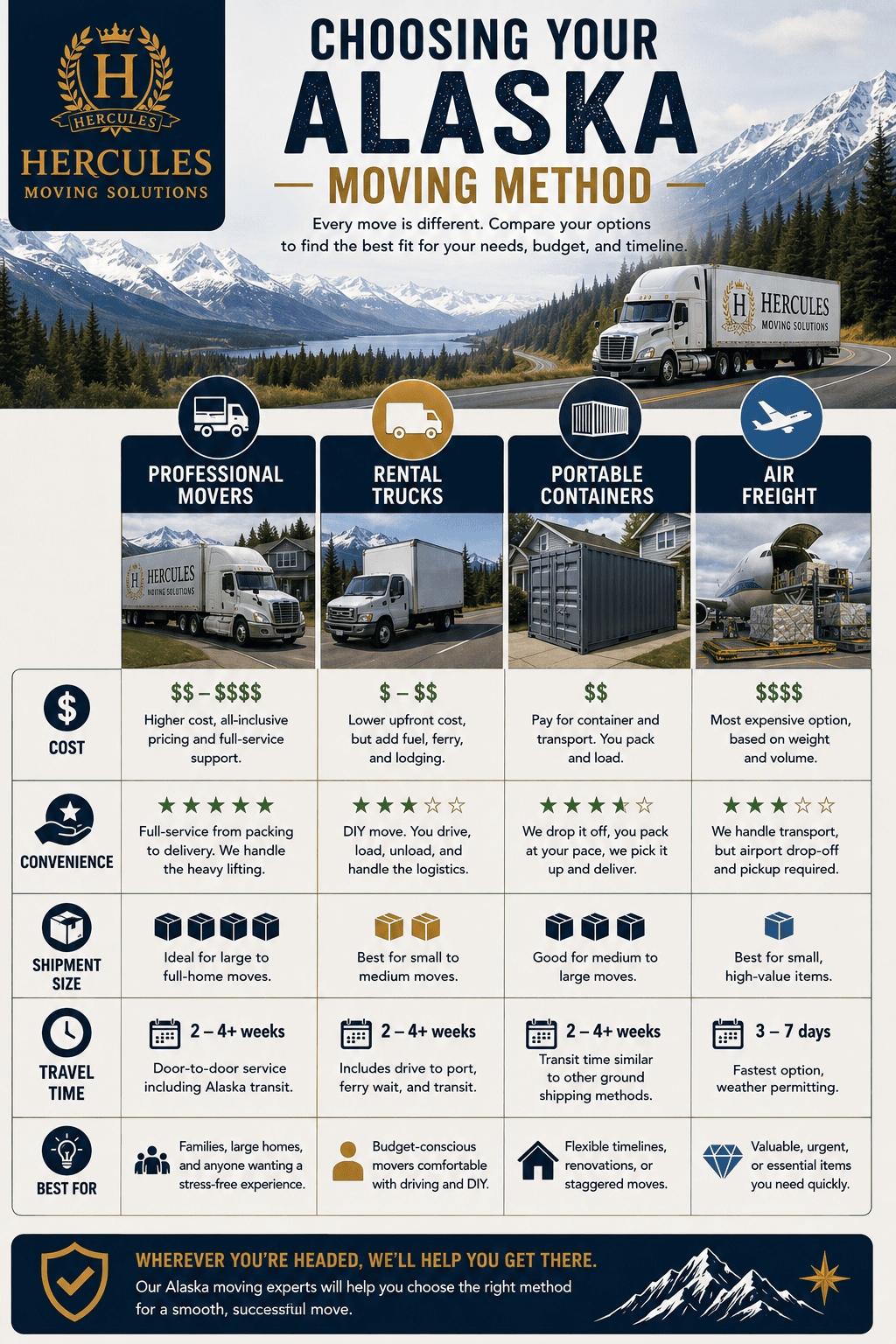
Unlike moves within the Lower 48, relocating to Alaska often involves multiple transportation methods. Depending on where you’re moving from and your final destination, your belongings may travel by truck, cargo ship, ferry, or a combination of these services.
Choosing the right transportation option depends on your budget, timeline, shipment size, and destination.
Professional long-distance movers
For many households, working with professional movers is the simplest way to manage a complex relocation.
Professional moving companies coordinate the logistics involved in transporting household goods over long distances, including arranging transfers when multiple transportation methods are required.
This option is often ideal for:
- Large households
- Families relocating with children
- Military families
- Seniors
- Customers moving heavy furniture
- People with limited time for planning
Professional movers also help reduce the physical demands of packing, loading, and transportation.
Full-service moving
A full-service move can include:
- Professional packing
- Furniture protection
- Loading and unloading
- Transportation
- Shipment coordination
- Storage solutions when needed
This allows you to focus on preparing for your new home while experienced professionals manage the logistics.
Driving your own belongings
Some homeowners choose to transport their belongings themselves by:
- Rental moving truck
- Personal trailer
- Pickup truck
- Cargo trailer
While this option may appear flexible, it’s important to consider:
- Fuel costs
- Lodging
- Meals
- Border crossing requirements
- Vehicle maintenance
- Driving conditions
- Time away from work
For long-distance Alaska moves, these factors can add up quickly.
Portable storage containers
Portable moving containers are another option for certain relocations.
These containers are delivered to your home, allowing you to pack at your own pace before they’re transported toward your destination.
Container services may work well for:
- Smaller households
- Flexible moving schedules
- Gradual packing
- Temporary storage needs
Availability varies depending on your origin and destination, so check whether container delivery is available in both locations.
Air freight for essential items
Although most household goods travel by truck or ocean freight, some people choose to ship a limited number of essential belongings by air.
This option is commonly used for:
- Important documents
- Medical equipment
- Business supplies
- Electronics
- Time-sensitive household necessities
Air shipping is generally reserved for smaller shipments due to cost.
Choosing the right option
The best moving method depends on several factors.
Ask yourself:
- How large is my household?
- What is my moving budget?
- How quickly do I need my belongings?
- Am I comfortable driving thousands of miles?
- Will my destination require ocean transportation?
- Do I need temporary storage?
Answering these questions helps narrow your options before requesting moving estimates.
Sea Freight to Alaska: Container Options
Many Alaska relocations involve ocean transportation at some point during the journey.
Depending on your destination, household goods may travel by cargo ship after reaching a major port, making sea freight an important part of the overall relocation process.
Although customers don’t usually coordinate this transportation themselves when working with professional movers, understanding how the process works helps set realistic expectations.
Why sea freight is often necessary
Unlike most states, Alaska’s transportation network includes extensive marine shipping.
Many household shipments travel by sea because:
- Some communities aren’t connected by highways.
- Ocean transportation is efficient for large shipments.
- Certain destinations are primarily supplied through ports.
- Freight can be transferred from trucks to cargo vessels.
For many relocations, truck transportation and sea freight work together as part of one coordinated move.
Containerized shipping
Household goods are often transported in secure shipping containers that help protect belongings during transit.
Containers provide several advantages, including:
- Protection from weather
- Efficient loading and unloading
- Reduced handling between transportation stages
- Improved organization during shipping
The exact type of container used depends on your shipment size and transportation requirements.
Transit time considerations
Ocean transportation typically requires additional planning compared with highway-only moves.
Transit times may vary depending on:
- Departure location
- Port schedules
- Weather conditions
- Vessel availability
- Final delivery destination
Because schedules can change, it’s helpful to build flexibility into your moving timeline.
Preparing your shipment
Before your belongings begin their journey, make sure they are packed appropriately for long-distance transportation.
Helpful preparation includes:
- Using sturdy moving boxes
- Wrapping fragile items carefully
- Protecting furniture with moving blankets
- Labeling boxes clearly
- Creating a household inventory
Good preparation reduces the risk of damage during multiple stages of transportation.
Keep essential belongings with you
Because sea freight shipments may take longer than traditional interstate deliveries, prepare an essentials bag containing items you’ll need immediately after arriving.
Include items such as:
- Clothing for several days
- Prescription medications
- Toiletries
- Chargers
- Important documents
- Laptops
- Children’s comfort items
- Pet supplies
Having these necessities readily available makes the transition much more comfortable while waiting for your household shipment.
Real Cost of Moving to Alaska From the Lower 48
One of the first questions most homeowners ask is about the cost of moving to Alaska.
Because every relocation is unique, there isn’t a single price that applies to every move.
The overall cost depends on numerous factors, including transportation distance, shipment size, destination, and the services you choose.
Understanding these variables allows you to budget more accurately and compare estimates with confidence.
Distance matters
The farther your household goods need to travel, the more transportation becomes a factor in overall pricing.
For Alaska relocations, costs may also reflect:
- Cross-country trucking
- Port transfers
- Ocean transportation
- Regional delivery services
- Fuel expenses
Each move follows its own transportation route depending on the destination.
Shipment size
The amount you’re moving has a significant impact on overall costs.
Larger shipments generally require:
- More labor
- Larger transportation equipment
- Additional packing materials
- More loading and unloading time
Many homeowners reduce costs by decluttering before moving day.
Selling, donating, or recycling unused belongings can lower shipment volume while simplifying unpacking after arrival.
Services you select
Your estimate also depends on the level of assistance you need.
Optional services may include:
- Full-service packing
- Partial packing
- Furniture disassembly
- Storage
- Specialty item handling
- Unpacking assistance
Choosing only the services that match your needs helps you balance convenience with your moving budget.
Seasonal demand
The time of year may also influence availability and scheduling.
Summer is often one of the busiest moving seasons due to:
- School schedules
- Military relocations
- Favorable weather
- Family vacations
Booking early can provide greater scheduling flexibility during peak moving periods.
Request a detailed estimate
Rather than focusing solely on the lowest price, compare estimates carefully.
Ask questions such as:
- Which services are included?
- Are packing materials included?
- How is delivery coordinated?
- Are storage options available if needed?
- What communication can I expect during transit?
Understanding the details behind each estimate helps you make an informed decision.
Moving to Anchorage vs. Fairbanks vs. Juneau
Alaska is the largest state in the U.S., and each community offers a different lifestyle and relocation experience.
Understanding the characteristics of your destination helps you prepare more effectively before moving.
Anchorage
Anchorage is Alaska’s largest city and serves as the state’s primary transportation hub.
Many newcomers choose Anchorage because of its:
- Larger job market
- Healthcare facilities
- Shopping options
- Universities
- Transportation connections
- Wide range of neighborhoods
Because it’s connected to Alaska’s highway system, many household shipments continue overland after arriving in the state.
Fairbanks
Located in Alaska’s Interior, Fairbanks offers a very different environment.
Residents experience:
- Colder winter temperatures
- Distinct seasonal daylight changes
- Strong military presence
- Outdoor recreation opportunities
- University community
People relocating to Fairbanks should prepare for more extreme winter conditions than many other parts of the state.
Juneau
Juneau, Alaska’s capital city, presents unique transportation considerations.
Unlike Anchorage and Fairbanks, Juneau is not connected to the North American road system, meaning household goods generally arrive by sea or air.
Residents appreciate Juneau for its:
- Coastal scenery
- Government employment opportunities
- Outdoor recreation
- Strong community atmosphere
Moving to Juneau often requires additional coordination because of its limited highway access.
Choosing the right community
Before relocating, research factors such as:
- Employment opportunities
- Housing availability
- Schools
- Healthcare access
- Transportation
- Cost of living
- Climate
- Recreation
The more you learn before moving, the easier it becomes to settle into your new home.
If you’re planning a relocation to Alaska, our Alaska Movers, Long Distance Movers, and Cross Country Movers can help coordinate every stage of your move. You may also find our What to Do With Stuff You Can’t Move blog helpful as you prepare your household for a long-distance relocation.
Life in Alaska: What to Prepare For Before You Move
Relocating to Alaska is about more than getting your belongings from one place to another. It’s also about preparing for a different way of life.
Many new residents are drawn to Alaska’s stunning landscapes, outdoor recreation, and close-knit communities. At the same time, daily routines, weather, transportation, and the availability of certain goods can differ significantly from what you’re used to in the Lower 48.
Preparing for these differences before you move can help make your transition much smoother.
Expect dramatic seasonal changes
One of the most noticeable differences is the variation in daylight throughout the year.
Depending on where you live in Alaska, you may experience:
- Very long summer days
- Short winter daylight hours
- Midnight sun in some northern areas
- Extended darkness during parts of winter
Many new residents find it takes time to adjust to these seasonal patterns.
Planning activities, maintaining healthy routines, and spending time outdoors can help make the transition easier.
Prepare for a different climate
Alaska’s weather varies greatly depending on the region.
For example:
- Southcentral Alaska experiences milder coastal conditions.
- Interior Alaska often has colder winters and warmer summers.
- Southeast Alaska receives more rainfall.
- Arctic regions experience much colder temperatures year-round.
Research the climate in your destination city so you can prepare appropriate clothing and household supplies before arriving.
Build an emergency preparedness kit
Because weather conditions can occasionally affect transportation or utility services, many Alaskans keep emergency supplies on hand.
A basic emergency kit may include:
- Flashlights
- Batteries
- First-aid supplies
- Bottled water
- Nonperishable food
- Blankets
- Portable phone chargers
- Basic tools
Having these essentials available provides additional peace of mind throughout the year.
Learn about local transportation
Transportation varies widely across Alaska.
Some communities rely primarily on:
- Highways
- Ferries
- Bush planes
- Seasonal roads
Before relocating, research:
- Your daily commute
- Winter driving conditions
- Public transportation
- Parking availability
- Airport access
- Ferry schedules, if applicable
Understanding your transportation options makes everyday life easier after your move.
Prepare for higher prices on some goods
Because many products travel long distances before reaching Alaska, certain items may cost more than they do in the Lower 48.
These can include:
- Groceries
- Furniture
- Appliances
- Building materials
- Specialty household items
Many new residents choose to compare prices before moving to decide whether certain items should be transported or purchased after arrival.
Embrace the Alaska lifestyle
One of the biggest rewards of living in Alaska is access to incredible outdoor experiences.
Popular activities include:
- Hiking
- Fishing
- Wildlife viewing
- Camping
- Skiing
- Snowshoeing
- Kayaking
Many newcomers discover that embracing local traditions and exploring the outdoors helps them feel at home more quickly.
Alaska Housing Market for New Arrivals
Housing is one of the first priorities after deciding to relocate.
Whether you plan to rent or purchase a home, researching your options before moving gives you more flexibility and helps reduce last-minute stress.
Decide where you want to live
Different Alaska communities offer different lifestyles.
Before choosing a neighborhood, consider:
- Commute times
- School districts
- Access to healthcare
- Shopping and grocery stores
- Outdoor recreation
- Public transportation
- Employment opportunities
The best location depends on your personal priorities and daily routine.
Renting before buying
If you’re unfamiliar with the area, renting first may give you time to explore different neighborhoods before purchasing a home.
This approach allows you to:
- Learn the local market
- Experience seasonal conditions
- Evaluate commute times
- Explore nearby amenities
Many newcomers appreciate the flexibility this provides during their first year.
Budget for housing expenses
In addition to monthly rent or mortgage payments, remember to budget for:
- Security deposits
- Utility setup
- Internet service
- Home maintenance
- Heating costs
- Homeowners or renters insurance
Creating a realistic housing budget helps prevent financial surprises after moving.
Research utilities
Utility services may vary depending on where you live.
Before arrival, confirm availability for:
- Electricity
- Water
- Sewer
- Internet
- Natural gas or heating fuel
- Trash collection
Scheduling utility activation before moving day helps your new home feel comfortable from the start.
The Alaska Moving Timeline: How Far in Advance to Plan
Because Alaska relocations often involve multiple transportation methods, planning ahead is especially important.
Starting early provides more flexibility with scheduling and helps ensure your move stays organized.
Eight Weeks Before Moving
Begin by:
- Requesting moving estimates
- Comparing transportation options
- Creating a moving budget
- Decluttering your home
- Researching Alaska communities
- Organizing important documents
Six Weeks Before Moving
Continue your preparations by:
- Booking your movers
- Ordering packing supplies
- Scheduling utility transfers
- Planning travel arrangements
- Notifying schools if applicable
- Requesting medical records
Four Weeks Before Moving
Focus on preparing your household.
Tasks include:
- Packing seasonal belongings
- Labeling boxes
- Confirming shipment details
- Arranging temporary housing if needed
- Updating your address
One Week Before Moving
During the final week:
- Pack an essentials bag.
- Confirm pickup dates.
- Prepare important documents.
- Clean your home.
- Charge electronics.
- Confirm travel reservations.
After Arrival
Once you reach Alaska:
- Inspect your shipment.
- Unpack priority rooms.
- Activate utilities.
- Register vehicles if required.
- Explore your neighborhood.
- Locate healthcare providers.
- Learn local emergency procedures.
Completing these tasks gradually helps your new home feel comfortable more quickly.
What to Bring and What to Buy in Alaska
Packing wisely can simplify both your move and your first few weeks in Alaska.
Because some household items may be easier or more economical to purchase locally, deciding what to transport deserves careful thought.
Bring important personal belongings
Items you should usually move with you include:
- Important documents
- Prescription medications
- Family photographs
- Electronics
- Valuable jewelry
- Children’s favorite toys
- Essential clothing
These belongings are difficult or impossible to replace.
Pack clothing for every season
Alaska’s climate varies throughout the year, so plan for changing conditions.
Consider bringing:
- Waterproof outerwear
- Insulated winter coats
- Layered clothing
- Warm gloves
- Hats
- Waterproof boots
- Thermal base layers
Layering provides flexibility as temperatures change.
Consider buying large items after arrival
Depending on shipping costs and the condition of your current furniture, it may make sense to replace certain items instead of transporting them.
Examples include:
- Older furniture
- Worn mattresses
- Damaged appliances
- Low-value household goods
Comparing replacement costs with transportation costs can help you make informed decisions.
Pack an essentials box
Your essentials box should contain everything you’ll need before your household shipment is fully unpacked.
Include items such as:
- Toiletries
- Basic cookware
- Coffee maker
- Paper towels
- Cleaning supplies
- Chargers
- Bedding
- Snacks
Having these items available immediately makes your first few days much more comfortable.
Don’t overpack
Many people discover they own more than they need.
Before moving, ask yourself:
- Have I used this in the past year?
- Would I buy it again today?
- Is it worth transporting?
- Can it be replaced easily?
Thoughtful decluttering helps reduce shipment size and simplifies unpacking after arrival.
If you’re preparing for a move to Alaska, our Alaska Movers, Long Distance Movers, and Cross Country Movers can help coordinate every stage of your relocation. You may also find our What to Do With Stuff You Can’t Move blog useful as you decide what to transport, donate, sell, or replace before moving day.
Get Your Alaska Moving Quote—Hercules Handles the Complexity
Moving to Alaska requires more planning than a typical interstate relocation, but with the right preparation and experienced support, the process can be much more manageable.
Whether you’re relocating for work, military service, retirement, or a new adventure, Hercules Moving Solutions coordinates long-distance moves through a trusted network of licensed and experienced moving carriers across the United States.
From helping you understand transportation options to coordinating complex shipping logistics, we’re here to make your move as organized and stress-free as possible.
Contact Hercules Moving Solutions today for a free Alaska moving quote and start planning your relocation with confidence.
Frequently Asked Questions
Is it possible to drive a moving truck to Alaska?
Yes. Many people drive to Alaska using the Alaska Highway (ALCAN Highway), although the route requires traveling through Canada. Be sure to review current border requirements, seasonal road conditions, and vehicle restrictions before your trip.
How much does it cost to ship a container to Alaska?
The cost depends on factors such as your starting location, shipment size, destination, transportation method, and any additional services you choose. Requesting a personalized moving estimate is the best way to understand your expected costs.
How long does it take for a moving shipment to arrive in Alaska?
Transit times vary based on your origin, destination, weather conditions, transportation routes, and whether your shipment includes ocean freight. Your moving coordinator can provide a delivery window based on your specific move.
What are the biggest challenges of moving to Alaska?
Common challenges include longer transportation routes, changing weather conditions, limited highway access to some communities, higher shipping costs, and adapting to seasonal daylight changes.
What should I know about living in Alaska before I relocate?
Research your destination’s climate, housing market, transportation options, healthcare services, and cost of living. Planning ahead helps make the adjustment much smoother.
Is moving to Alaska more expensive than moving within the Lower 48?
In many cases, yes. Longer transportation distances, ocean freight, and more complex logistics can increase moving costs compared to standard interstate relocations.
Should I sell my furniture before moving to Alaska?
It depends on the age, value, and size of your furniture, as well as transportation costs. Compare the cost of shipping with the cost of replacing items after arrival.
When is the best time to move to Alaska?
Summer is generally the busiest moving season because of milder weather and longer daylight hours. Booking early can provide greater scheduling flexibility during peak periods.
Can professional movers coordinate both truck and sea transportation?
Yes. For many Alaska relocations, professional movers coordinate multiple transportation methods, including highway and ocean freight, depending on your destination.
How far in advance should I plan an Alaska move?
Most long-distance Alaska relocations benefit from starting preparations at least six to eight weeks before moving day, especially if your shipment requires multiple transportation stages.