Preparing for a long-distance move often starts with packing, but one of the biggest challenges is deciding what not to pack. Many people assume they can load everything they own onto the moving truck, only to discover that certain belongings can’t be transported due to safety regulations, company policies, or practical limitations.
If you’re wondering what to do with stuff you can’t move long distance, you’re not alone. Every interstate relocation requires some difficult decisions, whether it’s hazardous materials in the garage, leftover food in the pantry, or bulky furniture that isn’t worth transporting.
The good news is that you have plenty of options. Depending on the item, you may be able to sell it, donate it, recycle it, place it in storage, or transport it separately.
At Hercules Moving Solutions, we help customers coordinate long-distance relocations with trusted, licensed carriers across the United States. One of the most common questions we hear is, “What can I actually bring?” Understanding the answer before moving day helps prevent delays, avoids unexpected complications, and makes packing much easier.
This guide explains what not to move long distance, the types of items movers won’t transport, and the smartest ways to handle belongings that can’t travel on the moving truck.
Why You Can’t (and Shouldn’t) Move Everything Long Distance
Professional interstate movers follow strict safety regulations designed to protect your belongings, the moving crew, and everyone sharing the road.
Some items create fire hazards, others spoil quickly, and certain belongings require special transportation methods that standard moving trucks aren’t equipped to provide.
Trying to pack prohibited items can delay your move, increase safety risks, or even violate federal transportation regulations.
Instead of viewing these restrictions as inconveniences, think of them as safeguards that help ensure your relocation goes as smoothly as possible.
The best time to identify prohibited items is several weeks before moving day.
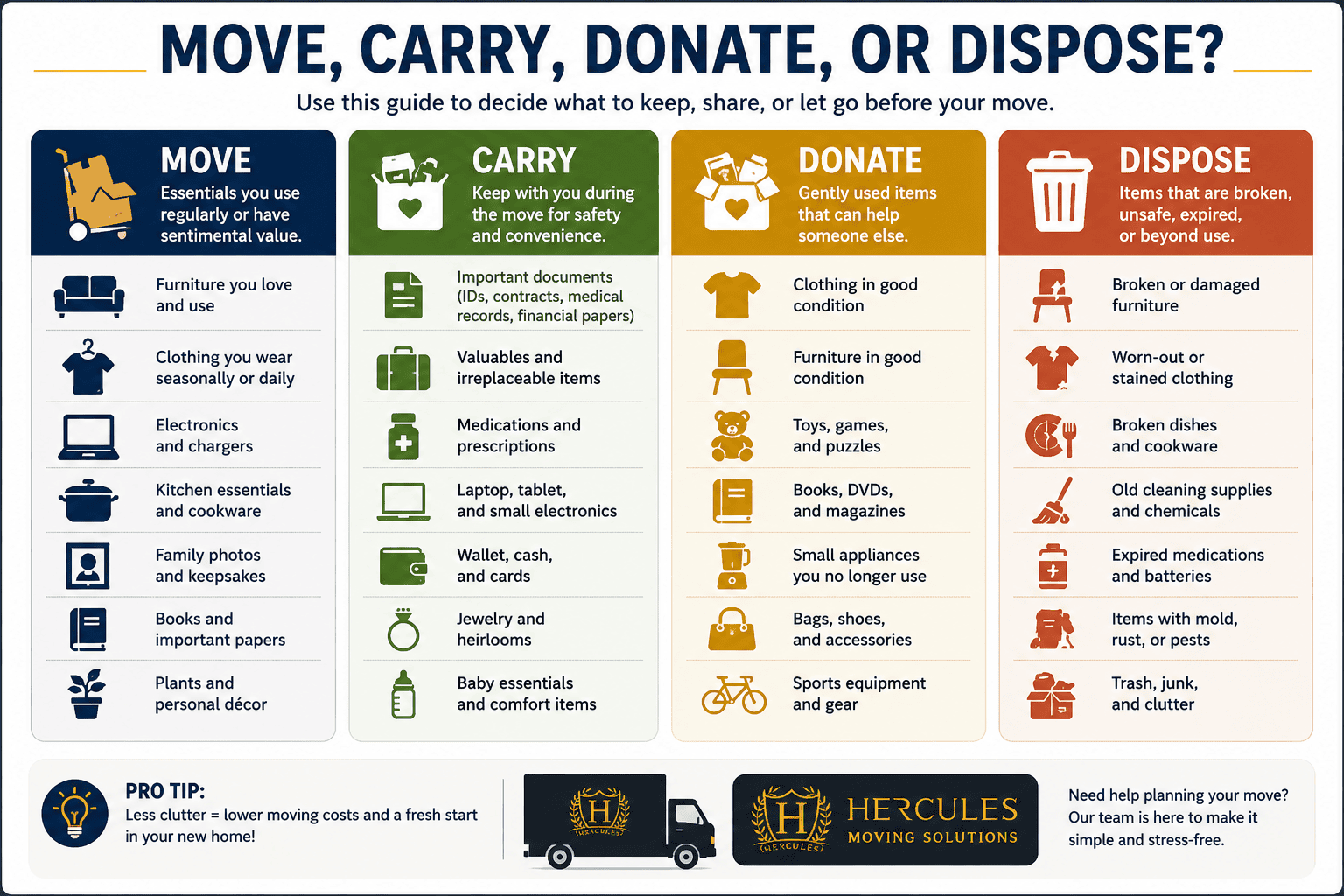
As you sort through your home, separate belongings into four categories:
- Move with the movers
- Transport yourself
- Donate or sell
- Dispose or recycle
This simple system keeps packing organized while reducing last-minute decisions.
Planning ahead also gives you time to explore alternatives such as storage, shipping, or charitable donations instead of scrambling during your final days before the move.
Hazardous Items Movers Refuse: Chemicals, Plants & More
Safety regulations prohibit professional movers from transporting many hazardous materials.
These items may leak, ignite, explode, or create dangerous conditions inside a moving truck.
Common examples include:
- Gasoline
- Propane tanks
- Paint
- Paint thinner
- Fireworks
- Ammunition
- Household cleaners containing hazardous chemicals
- Pool chemicals
- Fertilizers
- Pesticides
- Motor oil
- Kerosene
- Charcoal lighter fluid
Even everyday products stored in your garage may fall into this category.
For example:
- Aerosol spray cans
- Nail polish remover
- Certain batteries
- Solvents
- Fuel-powered lawn equipment containing gasoline
Before moving day, safely use up, recycle, or dispose of these materials according to your local waste disposal guidelines.
What about plants?
Many customers are surprised to learn that plants can also create challenges during interstate moves.
Some moving companies refuse to transport live plants because they:
- Require climate control
- Can carry insects or diseases
- May violate agricultural restrictions between states
- Can be damaged during long-distance transportation
Certain states—including California, Florida, and Hawaii—have agricultural inspection requirements that may restrict specific plants from crossing state lines.
Before relocating, check the regulations in your destination state.
What about pets?
Professional moving companies generally do not transport pets.
Instead, families should arrange safe transportation using:
- Personal vehicles
- Airlines
- Specialized pet transportation companies
Keeping pets with you also reduces stress during the move and allows you to monitor their health throughout the journey.

Items Long Distance Movers Won’t Transport — The Full List
Every moving company has its own policies, but most prohibited items fall into several common categories.
Knowing these restrictions ahead of time prevents delays and helps you build a better packing strategy.
Here’s a general overview.
| Category | Typical Examples |
|---|---|
| Hazardous materials | Paint, propane, gasoline, fireworks |
| Perishable food | Fresh produce, frozen food, refrigerated items |
| Live plants | Houseplants, outdoor potted plants |
| Pets | Dogs, cats, birds, reptiles |
| Valuable personal items | Cash, jewelry, passports |
| Firearms and ammunition | Subject to company policies and applicable laws |
| Certain medications | Prescription drugs should remain with you |
| Important documents | Birth certificates, Social Security cards, legal paperwork |
Many of these items aren’t prohibited because they’re illegal.
Instead, they’re excluded because they require specialized handling or could be damaged during transportation.
For example, passports and financial records should always stay with you, not because movers refuse them, but because replacing them would be difficult if they were delayed or lost.
Likewise, expensive jewelry, family heirlooms, and personal electronics are often safer when transported personally.
If you’re using professional Packing Services, ask your moving coordinator which items should remain outside the shipment before packing begins.
Perishable Food and Long Distance Moves
Food is another category that often causes confusion.
Most professional movers won’t transport refrigerated or frozen food because it can spoil during transit.
Perishable foods commonly include:
- Fresh fruit
- Vegetables
- Meat
- Dairy products
- Frozen meals
- Refrigerated beverages
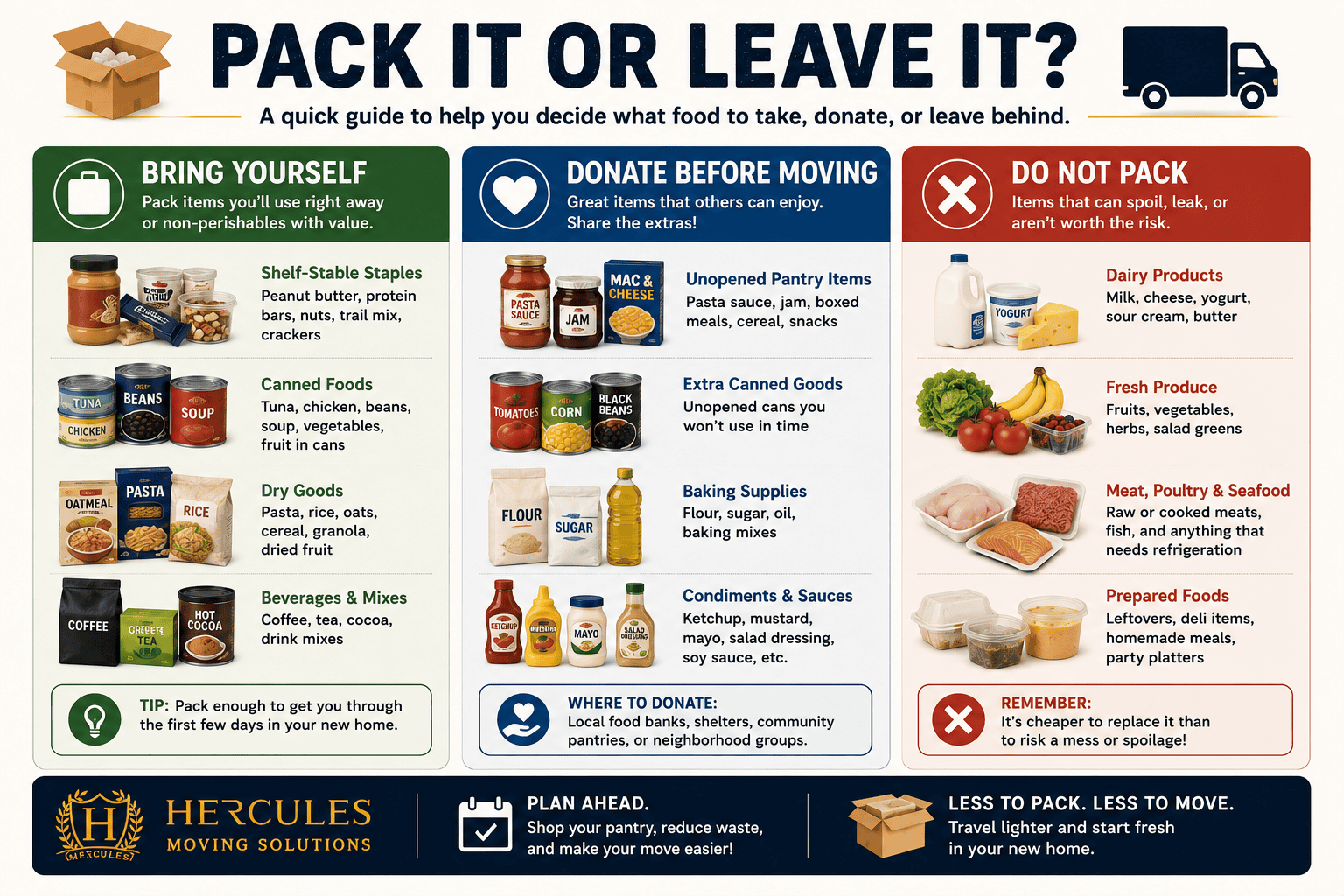
Even shelf-stable food may not be worth transporting if you’re moving across the country.
Instead of paying to move heavy pantry items, many families choose to:
- Use them before moving day
- Donate unopened products to local food banks
- Give them to friends or neighbors
This reduces waste while lowering the overall weight of your shipment.
If you have unopened canned goods or dry pantry items, ask your moving company whether they’re acceptable to include.
Policies vary depending on the carrier and the length of transit.
Reducing unnecessary pantry items also creates more space for belongings you’ll actually need in your new home.
Smart Options for Getting Rid of Items Before a Long Distance Move
Once you’ve identified the belongings that can’t — or shouldn’t — go on the moving truck, the next step is deciding what to do with them.
Every household has items that no longer fit their lifestyle, won’t be practical in a new home, or simply cost more to transport than they’re worth. Taking the time to sort through these belongings before packing can reduce moving expenses, simplify unpacking, and help you start fresh in your new home.
If you’re wondering what to do with stuff you can’t move long distance, here are some of the most effective options.
Sell items you no longer need
Selling unwanted belongings can help offset some of your moving expenses.
Popular places to sell include:
- Facebook Marketplace
- Craigslist
- OfferUp
- Local buy-and-sell groups
- Garage or yard sales
- Consignment stores
Items that often sell well include:
- Furniture
- Exercise equipment
- Lawn tools
- Power tools
- Electronics
- Appliances
- Home décor
If you’re moving several states away, listing larger items a few weeks before moving day gives buyers enough time to arrange pickup.
Donate usable household items
Many belongings may still have value even if they aren’t worth moving.
Consider donating:
- Clothing
- Kitchenware
- Small appliances
- Toys
- Books
- Bedding
- Furniture in good condition
Local charities, shelters, schools, and nonprofit organizations often accept these donations and may even offer scheduled pickup services.
Donating can also save you time compared to trying to sell every individual item.
Recycle responsibly
Some belongings shouldn’t be thrown into regular household trash.
Look for local recycling programs for:
- Electronics
- Batteries
- Paint
- Motor oil
- Light bulbs
- Appliances
- Scrap metal
Many cities host household hazardous waste collection events that safely dispose of products professional movers cannot transport.
Rent temporary storage
If you’re not ready to part with certain belongings but can’t move them immediately, storage may be the best solution.
Storage is particularly helpful when:
- Your new home isn’t ready.
- You’re downsizing temporarily.
- You’re renovating before moving in.
- You’re unsure which furniture will fit your new space.
Our Storage Services provide a secure option for customers who need additional flexibility during a long-distance relocation.
High-Value Items: What to Handle Personally
Although professional movers safely transport most household belongings, there are certain valuables you’ll usually want to keep with you.
These aren’t necessarily prohibited items. Instead, they’re simply too important to risk separating from during a long-distance move.
Items to transport personally include:
- Passports
- Driver’s licenses
- Birth certificates
- Social Security cards
- Medical records
- Financial documents
- Jewelry
- Family heirlooms
- Prescription medications
- Laptop computers
- External hard drives
- Personal firearms (subject to applicable laws)
Keeping these belongings with you offers several advantages.
You’ll always know where they are, you’ll have immediate access when needed, and you’ll avoid the stress of searching through boxes after arriving at your new home.
If you’re flying to your destination, pack these items in your carry-on luggage rather than checked baggage whenever possible.
Families should also prepare a separate essentials bag containing:
- Chargers
- Toiletries
- One or two changes of clothes
- Snacks
- Children’s comfort items
- Pet supplies
- Basic first aid supplies
Having these necessities nearby makes the first day in your new home much easier, especially if your shipment arrives a day or two later.
Selling, Donating & Disposing Before Your Move
One of the biggest mistakes people make before relocating is paying to move items they no longer want.
Long-distance moving costs are often based on the shipment’s weight or the amount of space your belongings occupy in the moving truck. Reducing unnecessary items before moving day can lower transportation costs while making your new home easier to organize.
Ask yourself a few simple questions as you sort through each room:
- Have I used this in the past year?
- Does it fit my new home?
- Is it worth paying to transport?
- Would replacing it cost less than moving it?
If the answer to the last question is yes, selling or donating may be the smarter financial decision.
A helpful approach is to create four clearly labeled categories:
| Category | What Belongs Here? |
|---|---|
| Keep | Items you’ll definitely use in your new home |
| Sell | Valuable belongings you no longer need |
| Donate | Usable household goods that can help others |
| Dispose | Broken, expired, or unsafe items |
This simple system prevents last-minute decision fatigue and keeps the packing process organized.
Many families are surprised by how much lighter—and more affordable—their move becomes after decluttering.
How to Sell Furniture Before a Long Distance Move
Large furniture often creates the biggest dilemma during an interstate relocation.
While some pieces are worth transporting, others may cost more to move than they’re worth.
Consider selling furniture if it:
- Is inexpensive to replace
- Doesn’t fit your new home
- Shows significant wear
- Has low resale value after transportation costs
- Would be difficult to move safely
Popular places to sell furniture include:
- Facebook Marketplace
- OfferUp
- Craigslist
- Local consignment stores
- Community buy-and-sell groups
Good photos make a significant difference.
Before creating your listing:
- Clean the furniture thoroughly.
- Photograph it in natural lighting.
- Include measurements.
- Mention any scratches or imperfections honestly.
- Clearly state pickup requirements.
Pricing items fairly usually results in a quicker sale, especially if you’re working within a moving deadline.
If a piece doesn’t sell in time, consider donating it to a local nonprofit rather than paying to transport something you no longer need.
Many charitable organizations accept gently used:
- Sofas
- Dining tables
- Chairs
- Dressers
- Bed frames
- Bookshelves
Some organizations even offer free pickup, saving you additional time and effort.
What to Ship Separately vs Leave Behind
Not everything that stays off the moving truck needs to be sold or thrown away. Some belongings are better shipped separately, while others are safer if you transport them yourself.
Knowing the difference helps protect valuable items and keeps your interstate move organized.
Items you should keep with you
Certain belongings are too important to pack inside the moving truck.
Always transport these personally whenever possible:
- Passports
- Driver’s license
- Birth certificates
- Social Security cards
- Financial documents
- Prescription medications
- Jewelry
- Family heirlooms
- Laptop computers
- External hard drives
- Mobile devices and chargers
Having these essentials with you ensures they’re immediately accessible throughout your move.
Items that can be shipped separately
Some belongings may be easier or more cost-effective to send through shipping carriers rather than including them in your household shipment.
Examples include:
- Small electronics
- Collectibles
- Books
- Seasonal clothing
- Hobby equipment
- Musical instruments (when professionally packed)
Depending on the item’s size, value, and destination, shipping separately may offer faster delivery and easier tracking.
If you’re shipping fragile or valuable belongings, choose a carrier that provides tracking, insurance, and signature confirmation.
Items that are better left behind
Sometimes, transporting an item simply isn’t worth the expense.
You may want to leave behind:
- Worn-out furniture
- Old mattresses
- Broken appliances
- Outdated electronics
- Expired household products
- Damaged outdoor equipment
Replacing inexpensive or heavily worn items after your move is often more practical than paying to transport them across the country.
Here’s a simple guide.
| Item | Best Option |
|---|---|
| Important documents | Keep with you |
| Jewelry | Keep with you |
| Prescription medication | Keep with you |
| Laptop and electronics | Keep with you or ship insured |
| Family heirlooms | Keep with you whenever possible |
| Seasonal clothing | Ship separately if needed |
| Old furniture | Sell or donate |
| Hazardous materials | Dispose of properly |
| Pantry food | Use, donate, or discard |
Making these decisions before packing day saves time and reduces unnecessary transportation costs.
Storage as a Bridge Solution Before Your Move
Sometimes the best decision isn’t moving an item immediately at all.
Storage provides flexibility when your moving timeline doesn’t perfectly match your housing schedule.
Temporary storage is especially helpful if:
- Your new home isn’t ready yet.
- You’re waiting on a home closing.
- You’re renovating before moving in.
- You’re downsizing and need time to decide what to keep.
- You’re relocating for work before the rest of your family joins you.
Instead of rushing difficult decisions, storage gives you additional time to determine what truly belongs in your new home.
At Hercules Moving Solutions, our Storage Services can help bridge the gap between homes while keeping your belongings secure until you’re ready to receive them.
Before choosing a storage solution, consider:
- Climate-controlled storage for sensitive items
- Security features
- Insurance coverage
- Accessibility
- Short-term versus long-term pricing
Storage can also reduce moving-day stress by allowing you to move only the essentials first and organize the remaining belongings later.
Need Help With Your Long Distance Move?
Knowing what to do with stuff you can’t move long distance is just one part of planning a successful relocation.
From deciding what to sell or donate to arranging storage and packing your belongings safely, every decision you make before moving day helps create a smoother, more efficient transition.
At Hercules Moving Solutions, we work with trusted, licensed carriers across the country to make long-distance moves as simple and stress-free as possible. Whether you’re relocating a small apartment or a large family home, our experienced team can help you understand what belongs on the moving truck, what should travel separately, and how to prepare every step of the way.
Request your free quote today and let Hercules Moving Solutions help you plan your long-distance move with confidence.
Frequently Asked Questions
What items can’t be transported by long distance movers?
Most professional movers cannot transport hazardous materials such as gasoline, propane tanks, fireworks, paint, pesticides, and certain chemicals. Many also restrict live plants, pets, perishable food, and valuable personal items like cash, jewelry, and important documents.
Can I ship plants or pets when moving long distance?
Professional moving companies generally do not transport pets, and many also limit or prohibit transporting live plants because of agricultural regulations and the risk of damage during transit. Pets should travel with you or through a specialized pet transportation service, while plant restrictions vary by state.
Should I sell my furniture before a long distance move?
It depends on the item’s value, condition, and replacement cost. Older or inexpensive furniture may cost more to transport than to replace, while high-quality or sentimental pieces are often worth moving.
What do I do with my car when moving long distance?
You can drive your vehicle to your new home or arrange professional auto transportation if driving isn’t practical. The best option depends on your relocation distance, schedule, and budget.
Can I keep some items in storage while waiting for my new home?
Yes. Temporary storage is an excellent solution if your new home isn’t ready, you’re downsizing, or you need additional flexibility during your relocation. Many moving companies, including Hercules Moving Solutions, offer storage options that keep your belongings secure until you’re ready to receive them.
Conclusion
Every long-distance move requires thoughtful decisions about what to bring, what to leave behind, and how to handle belongings that can’t travel on the moving truck.
By identifying items movers won’t transport early, organizing your belongings into clear categories, and exploring options like selling, donating, shipping, or storing your possessions, you’ll reduce stress and avoid last-minute surprises.
Planning ahead also helps lower moving costs, simplify packing, and make settling into your new home much easier.
At Hercules Moving Solutions, we’re committed to helping customers navigate every stage of their relocation. Through our nationwide network of trusted, licensed carriers, we provide dependable long-distance moving solutions tailored to your timeline, budget, and household needs.