Best Long Distance Moving Services to Hawaii
By Hercules Moving Solutions Editorial Team · Updated 2026-08-19 Choosing the best long-distance moving services to Hawaii requires more than comparing the lowest quote. A
Our company is currently experiencing technical difficulties with our phone lines.
Please contact us via support@herculesmovingsolutions.com
Licensed Moving Broker
Licensed Moving Broker
Packing is often the most time-consuming part of any move. Between organizing every room, finding the right supplies, protecting fragile belongings, and labeling hundreds of boxes, it's easy to underestimate how much work is involved. If you're preparing for a long distance or interstate relocation, packing mistakes can also increase the risk of damage once your belongings spend days on the road.
A move across town may only involve a short drive.
A long-distance move is different.
Your belongings may travel hundreds or even thousands of miles, be loaded and unloaded multiple times, and remain inside the moving truck for several days before reaching your new home. Every stage of transportation creates opportunities for shifting, vibration, and accidental impact.
That’s why many homeowners choose professional packers long distance movers rely on to prepare belongings for extended travel.
Professional packing focuses on protecting your items throughout the entire relocation, not simply making them easier to transport.
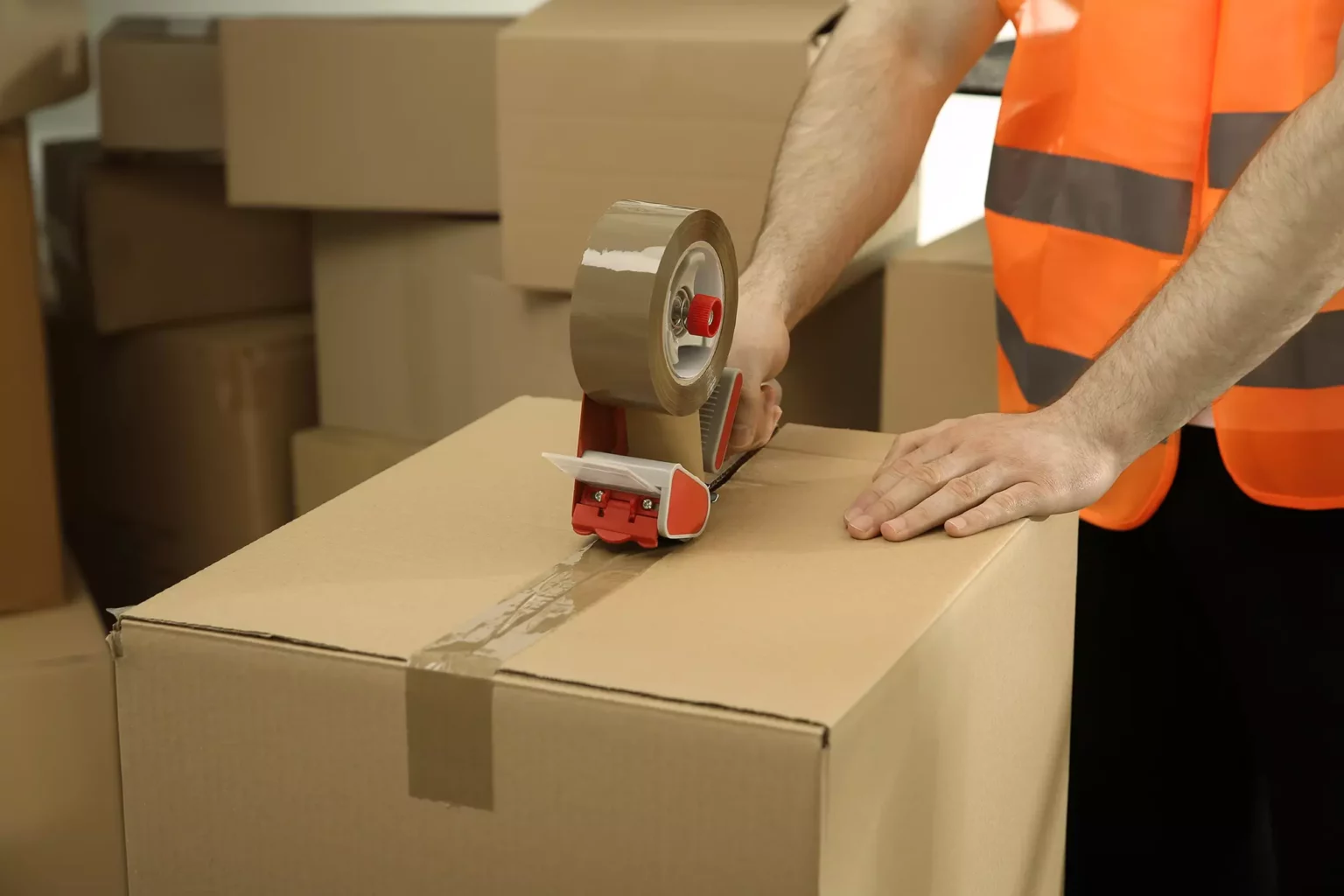
Every box inside a moving truck experiences movement.
Furniture shifts slightly during transportation. Boxes are stacked together. Roads vary from smooth highways to uneven surfaces. Temperature and humidity can also change throughout a cross-country move.
Without proper packing, even ordinary household items may become damaged before arriving at your destination.
Professional packing helps reduce these risks by using:
The goal is to keep your belongings stable from pickup through delivery.
Many homeowners believe packing can be finished over a weekend.
Once the process begins, they often realize they still need to:
We’ve seen many customers begin packing weeks before moving day only to discover that balancing work, family responsibilities, and moving preparations becomes more challenging than expected.
Professional packing allows you to focus on your upcoming relocation while experienced crews handle one of the most labor-intensive parts of the process.
Many people assume packing services are only useful for dishes and glassware.
In reality, almost every household item benefits from proper preparation.
Professional packing can help protect:
Each category requires different packing techniques depending on weight, shape, and fragility.
Packing isn’t only about protecting belongings.
It’s also about making life easier after the move.
A well-organized packing system helps you locate essential items quickly after arriving at your new home.
Many professional packing crews organize boxes by:
| Organization Method | Benefit After Moving |
|---|---|
| Room | Faster unpacking room by room |
| Priority | Essential items are easier to locate first |
| Fragility | Extra care during loading and unloading |
| Box Number | Simplifies inventory tracking |
| Special Instructions | Identifies items requiring careful handling |
Good organization can save hours or even days during unpacking.
Every move is different, but customers often tell us they choose professional packing because they want to:
At Hercules Moving Solutions, we believe packing should help reduce moving stress, not add to it.
That’s why we work with experienced moving professionals who understand how to prepare household belongings for safe interstate transportation.
One of the biggest advantages of hiring a moving packing service is having a structured system.
Rather than packing randomly, professional crews work methodically through the home to improve efficiency while protecting your belongings.
Although every relocation is unique, the packing process typically follows a room-by-room approach that keeps similar items together and simplifies unpacking later.
Living rooms often contain a mix of fragile décor, electronics, and furniture accessories.
Professional packing may include:
Special attention is given to breakable pieces and electronics that require additional cushioning.
The kitchen is usually the most time-intensive room to pack.
Items often include:
Professional packers group similar items together while using protective wrapping to reduce movement inside each box.
Bedrooms contain a variety of materials that require different packing methods.
These commonly include:
Keeping belongings organized by room makes settling into your new home much easier.
Although bathrooms contain fewer large items, they often include liquids and personal care products that require additional attention.
Packing crews typically separate:
Leak-prone items are usually packed carefully to reduce the chance of spills during transportation.
These spaces often take the longest because they contain a wide variety of household belongings.
Examples include:
Organizing these areas before moving day helps reduce unnecessary transportation costs by identifying items that no longer need to be moved.
Before loading begins, many professional crews complete a final review to confirm:
This final inspection helps create a smoother loading process and makes unloading more organized at your destination.
If you’re planning a cross-country relocation, our Long Distance Movers and Cross Country Movers pages explain how professional packing works together with long-distance transportation to better protect your belongings.
We offer reliable packing services for all of your moving needs. This includes carefully packing, labeling, and transporting your belongings to ensure a smooth and efficient move. Leave the heavy lifting to us for a completely stress-free move.
Our unpacking services will ensure an effortless move. Our skilled team handles everything from fragile items to heavy furniture, prioritizing safety and care. We will take care of the boxes, so you can focus on settling in.
We've got you fully covered with our unpacking and organizing services. With years of experience, we know what it takes to safely unpack and organize your belongings to make your new home move-in-ready!
Our experienced packers provide all necessary, high-quality materials to ensure your belongings are safely packed and ready for transportation. From delicate items to bulky furniture, we handle it all.
Get a Quote
GOOD





The cost depends on factors such as the size of your home, the number of belongings, packing materials required, and whether you choose full or partial packing services. A personalized quote provides the most accurate estimate.
Professional packing uses proven techniques, high-quality materials, and organized loading methods that help reduce the likelihood of damage during long-distance transportation.
Yes. Many homeowners choose partial packing services, handling everyday belongings themselves while professionals pack fragile, oversized, or high-value items.
Yes. Professional packing services typically include the appropriate boxes, protective wrapping, tape, cushioning materials, and specialty packing supplies needed for your belongings.
For many homeowners, professional packing saves time, reduces stress, and provides additional protection for belongings that will spend several days in transit.
Scheduling several weeks before your move allows enough time to coordinate packing, transportation, and any specialty services such as custom crating or storage.
Yes. Fragile belongings often require specialized packing techniques, additional protective materials, or custom crating depending on their size, value, and condition.
Yes. Unpacking services can be added to help organize your belongings, remove packing materials, and make your new home functional more quickly.
Yes. Professional packing crews generally label boxes by room, contents, and handling instructions to simplify unloading and unpacking.
Absolutely. Packing services are commonly coordinated alongside long-distance and interstate moves to create a more organized and efficient relocation experience.
Advice from Trusted Movers
Are you planning to move to a new home or office soon? Let Hercules Moving Service take care of all your moving needs! Our team of experienced movers is dedicated to making your move as stress-free and efficient as possible.
By Hercules Moving Solutions Editorial Team · Updated 2026-08-19 Choosing the best long-distance moving services to Hawaii requires more than comparing the lowest quote. A
By Hercules Moving Solutions Editorial Team · Updated 2026-08-19 Preparing for a Hawaii relocation requires more planning than a typical mainland move. The distance, ocean
A long-distance move is more than transporting boxes from one address to another. When relocating across state lines, families and businesses need a moving company
Moving to Hawaii is unlike any typical long-distance relocation. Instead of driving belongings across state lines, household goods must travel thousands of miles across the
By Hercules Moving, Hercules Moving Solutions Relocating to Hawaii is a thrilling adventure but requires a distinct approach compared to mainland moves. Whether you’re drawn by
By Hercules Moving, Hercules Moving Solutions Relocating to Hawaii is more than just a move—it’s a lifestyle change, an adventure that requires thoughtful preparation tailored to
DOT: 3497836 – MC: 1153414
Please note that a properly licensed interstate broker, such as Hercules Moving Solutions, is not a motor carrier and will not transport an individual shipper’s household goods, but will coordinate and arrange for the transportation of household goods by an FMCSA authorized motor carrier, whose charges will be determined by its published tariff. All estimated charges and final actual charges will be based upon the carrier’s tariff which is available for inspection from the carrier upon reasonable request. (*) 70% OFF on Tariff Rates.