Moving out of state is one of the biggest transitions you’ll make. Whether you’re relocating for a new job, family, school, or simply a fresh start, there’s far more involved than packing boxes and loading a moving truck. Every interstate move comes with legal requirements, financial decisions, logistical planning, and dozens of small tasks that can easily be overlooked.
If you’re wondering how to move out of state without feeling overwhelmed, you’re not alone. Many people start planning with a simple checklist, only to realize there are countless deadlines, documents, and decisions that affect how smoothly the move goes.
At Hercules Moving Solutions, we’ve helped coordinate long-distance relocations across the United States by connecting customers with trusted, licensed carriers. One thing we’ve learned is that the most successful moves aren’t necessarily the fastest. They’re the ones planned well in advance, with every step carefully organized before moving day arrives.
This out of state relocation guide walks you through every stage of the process, from preparing months before your move to settling into your new community. You’ll also find practical advice that can help you avoid common mistakes, reduce stress, and make your transition as smooth as possible.
What Moving Out of State Actually Involves
Moving out of state isn’t simply transporting your belongings from one address to another.
An interstate move affects nearly every part of your life. You’ll need to coordinate transportation, update important records, transfer services, establish residency in a new state, and adjust to an unfamiliar community.
Many people focus most of their attention on packing, but that’s only one part of the process.
A successful move usually includes planning for:
- Finding reliable interstate movers
- Creating a realistic moving budget
- Updating legal documents
- Forwarding your mail
- Transferring utilities
- Changing insurance policies
- Registering vehicles
- Updating voter registration
- Finding healthcare providers
- Enrolling children in school if applicable
Trying to manage everything during the final week before your move often creates unnecessary stress.
Instead, begin planning several months ahead whenever possible.
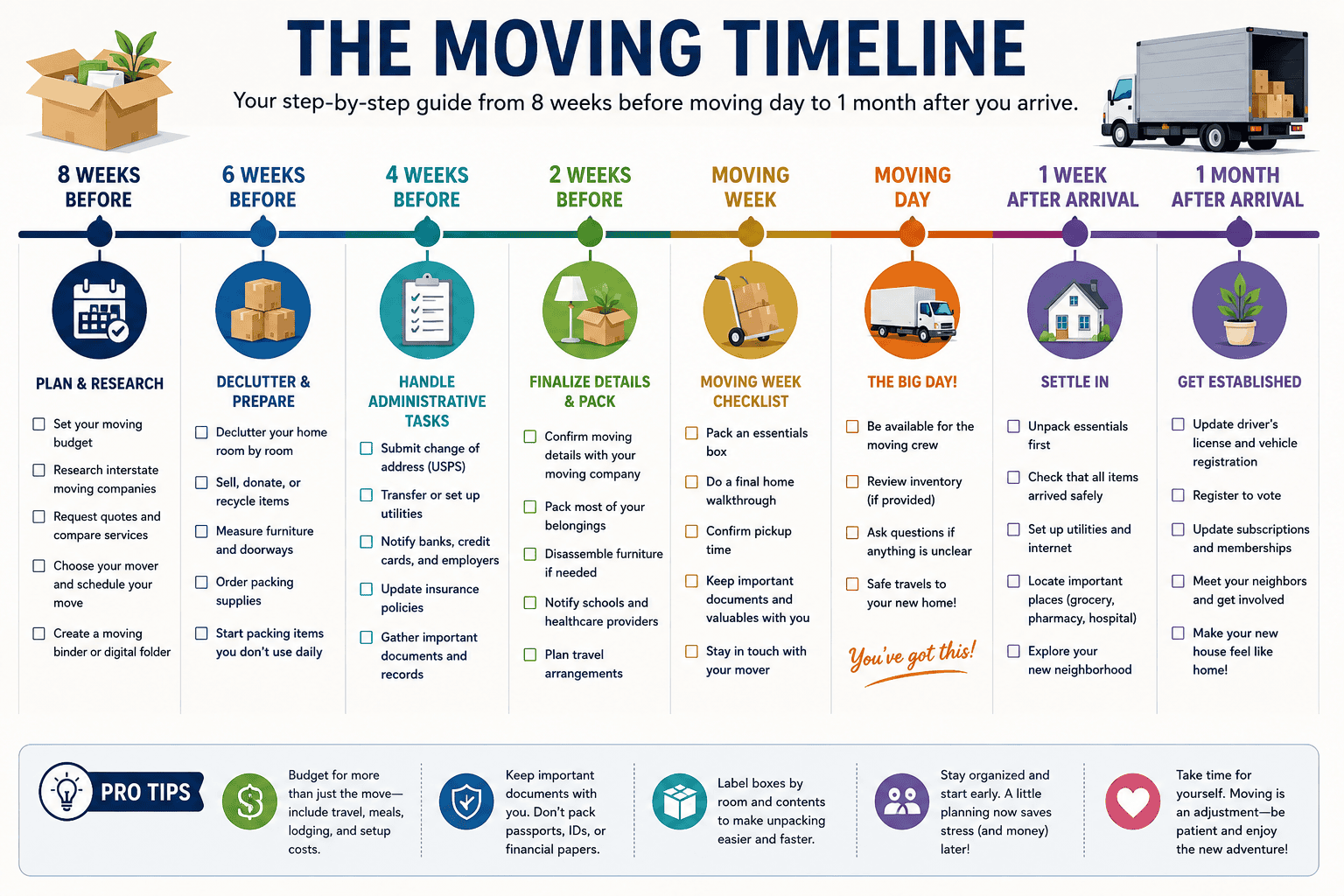
One of the easiest ways to stay organized is by creating a master checklist divided into weekly tasks.
For example:
| Timeline | Primary Tasks |
|---|---|
| 8 weeks before | Research movers, request estimates, create moving budget |
| 6 weeks before | Declutter, begin packing non-essential items |
| 4 weeks before | Submit address changes, transfer utilities |
| 2 weeks before | Confirm moving schedule, pack remaining rooms |
| Moving week | Final walkthrough, prepare essentials box |
| After arrival | Update driver’s license, vehicle registration, healthcare providers |
Breaking your move into manageable stages helps prevent last-minute surprises and makes the entire relocation feel much more manageable.
Updating Your Driver’s License and Registration in a New State
One of the first legal responsibilities after moving out of state is establishing residency.
Every state has its own requirements and deadlines for updating your driver’s license and registering your vehicle.
Most states require you to complete these tasks within 30 to 90 days, although the exact timeline varies depending on where you move.
Generally, you’ll need:
- Your current driver’s license
- Proof of your new address
- Vehicle title or registration
- Proof of insurance
- Identification documents
Some states also require emissions testing or vehicle inspections before issuing new registration.
Many people don’t realize these requirements until after they’ve moved, which can lead to unnecessary fines or delays.
We’ve found that scheduling DMV appointments before arriving often saves customers hours of waiting once they’re settled.
It’s also worth checking whether your new state requires:
- New license plates
- Updated voter registration
- Vehicle property tax documentation
- Additional residency paperwork
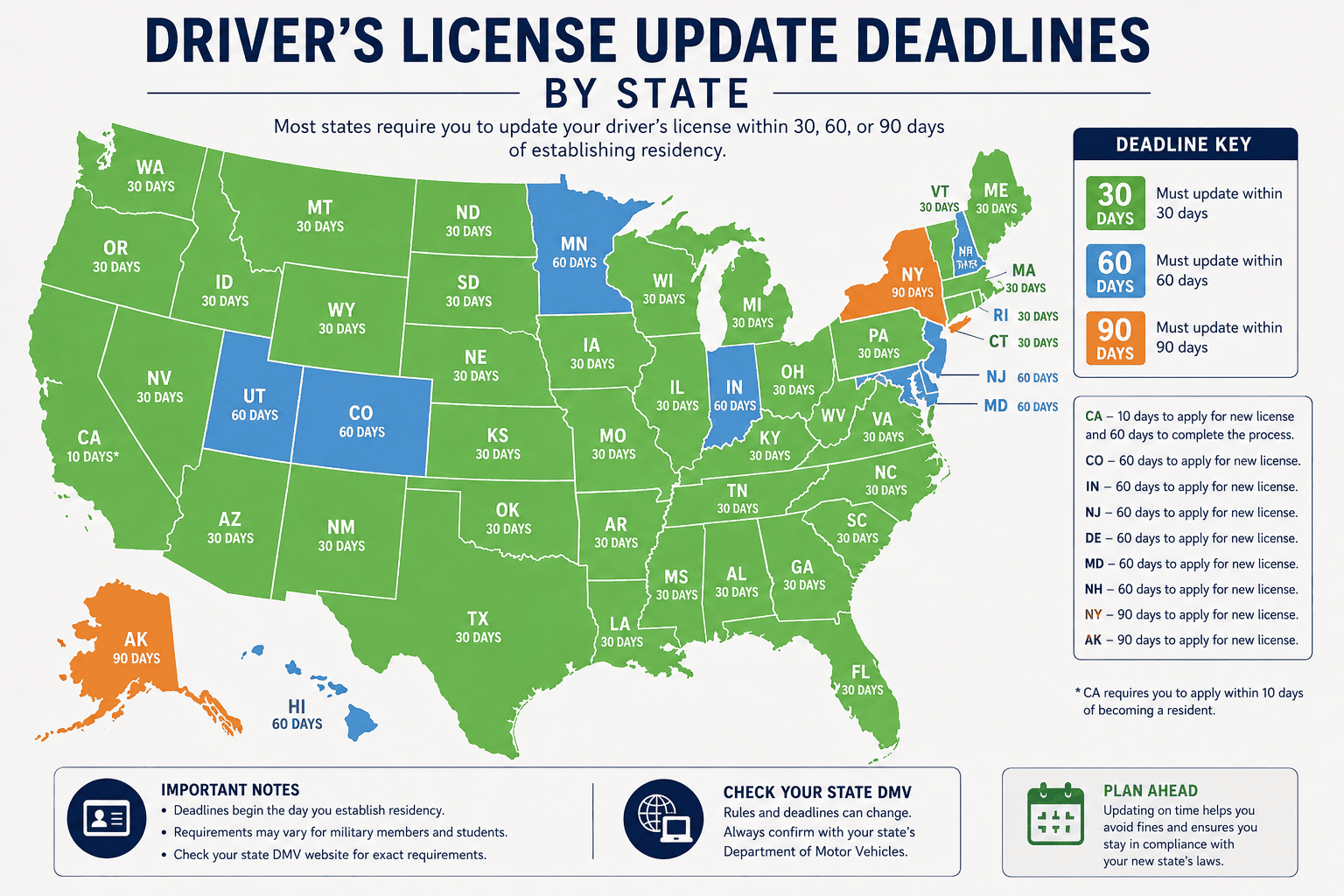
For the latest requirements, visit your state’s Department of Motor Vehicles website before your move so you’ll know exactly what documents to bring.
Before You Move: Legal and Administrative Tasks by State
Long before moving day arrives, there are several administrative responsibilities you’ll want to complete.
Missing even one important task can create unnecessary complications after you’ve relocated.
Your moving checklist should include updating information with organizations such as:
- Banks
- Credit card companies
- Employers
- Retirement accounts
- Investment firms
- Subscription services
- Professional licensing boards
- Tax agencies
If you’re employed remotely, notify your employer as early as possible.
Moving to another state may affect:
- Payroll taxes
- State tax withholding
- Employment eligibility documentation
- Benefits administration
Healthcare is another area that’s easy to overlook.
Before leaving your current state, consider:
- Requesting copies of medical records
- Refilling prescription medications
- Asking current physicians for specialist referrals
- Confirming insurance coverage in your new location
Families with children should also begin researching school districts well before moving.
Many districts require documentation such as:
- Birth certificates
- Immunization records
- Academic transcripts
- Proof of residency
Collecting these documents early makes enrollment much smoother after you arrive.
At Hercules Moving Solutions, we’ve seen many customers focus heavily on the physical move while underestimating the paperwork involved. Starting these administrative tasks several weeks ahead helps eliminate much of the last-minute stress that often accompanies interstate relocations.
Transferring Utilities, Mail & Insurance Across State Lines
Changing your address involves much more than forwarding your mail.
Ideally, you should coordinate utility transfers so services stop shortly after you leave your current home and begin before you arrive at your new one.
Utilities commonly include:
- Electricity
- Natural gas
- Water
- Sewer
- Internet
- Cable or streaming equipment
- Trash collection
Creating overlap of one or two days helps avoid arriving at a home without electricity or internet access.
Mail forwarding is another task that should be completed early.
The United States Postal Service allows you to schedule mail forwarding before your move, reducing the risk of missing important documents.
Don’t forget to update your address with:
- Banks
- Insurance companies
- Credit cards
- Healthcare providers
- Online retailers
- Government agencies
- Vehicle financing companies
Insurance deserves special attention because moving across state lines often changes coverage requirements.
Depending on your situation, you may need to update:
- Auto insurance
- Homeowners insurance
- Renters insurance
- Health insurance
- Umbrella liability policies
Premiums sometimes increase or decrease based on your new location, making your move a good opportunity to review your coverage.

If you’re still choosing between moving options, our Long Distance Movers guide explains how professional movers coordinate interstate relocations and what services may simplify your transition.
Finding the Right Interstate Moving Company
Choosing the right moving company can have a bigger impact on your relocation than almost any other decision you make.
A professional mover does much more than transport your belongings. They help coordinate schedules, communicate timelines, protect your possessions, and reduce the stress that often comes with a cross-state move.
Unfortunately, not every company provides the same level of service. That’s why it’s important to research your options carefully before signing a contract.
When comparing moving companies, look for providers that:
- Are licensed for interstate moves
- Carry appropriate insurance coverage
- Offer transparent pricing
- Provide written estimates
- Have positive customer reviews
- Clearly explain pickup and delivery windows
- Respond promptly to your questions
Avoid choosing a company based solely on the lowest quote.
An unusually low estimate may not include services that you’ll ultimately need, leading to unexpected costs later.
Instead, ask each company detailed questions about:
- What’s included in the estimate
- Additional charges that may apply
- Packing options
- Storage availability
- Delivery timelines
- Claims process for damaged items
A trustworthy company will explain these details clearly before asking you to commit.
School Enrollment and Healthcare Transitions
If you’re moving with children or changing healthcare providers, planning ahead can make your first weeks in a new state much less stressful.
Many school districts require documentation before enrollment, including:
- Birth certificates
- Immunization records
- Previous school transcripts
- Proof of residency
- Emergency contact information
Contact your new school district as soon as you know your moving date to understand their enrollment requirements.
Healthcare transitions deserve the same attention.
Before relocating, consider:
- Requesting copies of medical records
- Asking your current physician for referrals
- Refilling long-term prescriptions
- Confirming your insurance network in your new state
- Researching nearby hospitals and urgent care centers
If you have ongoing medical treatment, scheduling appointments with new providers before you move can help avoid interruptions in care.
Families with pets should also arrange:
- Veterinary records
- Vaccination certificates
- Prescription transfers
- Microchip registration updates
These small details are easy to overlook but can save significant time after your move.
Packing, Loading & Logistics for an Out-of-State Move
Packing for an interstate move requires more planning than a local relocation.
Your belongings may travel hundreds or even thousands of miles, making proper packing essential for protecting everything during transit.
Start by packing rooms you use least.
Examples include:
- Guest bedrooms
- Seasonal decorations
- Bookshelves
- Decorative items
- Off-season clothing
As moving day approaches, work toward packing everyday living areas while leaving only the essentials for your final few days.
Label every box clearly.
Include:
- Destination room
- General contents
- Fragile if applicable
- Priority level for unpacking
This simple step makes unloading much more organized once you arrive.
Many homeowners also find it helpful to prepare an “essentials box.”
Include items such as:
- Toiletries
- Phone chargers
- Basic kitchen supplies
- Medications
- Important documents
- Several days of clothing
- Cleaning supplies
- Pet necessities
Keeping these items separate prevents unnecessary searching after a long day of travel.
Furniture should also be prepared before moving day.
Whenever possible:
- Disassemble large furniture
- Place hardware in labeled bags
- Wrap delicate surfaces
- Protect mattresses
- Secure drawers and doors
Professional movers can often assist with these tasks, helping reduce the risk of damage during transportation.
Budgeting for the True Cost of an Out-of-State Move
Many people underestimate how much an interstate relocation actually costs because they focus only on the moving estimate.
In reality, your total moving budget may include several additional expenses.
These commonly include:
- Professional moving services
- Packing materials
- Temporary storage
- Travel expenses
- Hotel stays
- Fuel
- Meals during travel
- Utility deposits
- Cleaning services
- Vehicle transportation if applicable
Creating a complete budget before moving helps you avoid financial surprises later.
Here’s an example of a basic interstate moving budget.
| Expense Category | Estimated Cost Range |
|---|---|
| Professional movers | Varies by distance and shipment size |
| Packing supplies | $100–$400 |
| Travel expenses | Varies |
| Hotels | Varies |
| Utility deposits | Varies by provider |
| Cleaning services | Optional |
| Storage | If needed |
| Vehicle shipping | If applicable |
Remember that every move is different.
Factors affecting cost include:
- Distance traveled
- Weight or volume of your shipment
- Time of year
- Additional services
- Accessibility at both locations
- Delivery schedule
Planning a realistic budget also gives you flexibility if unexpected expenses arise.
Many experienced movers recommend setting aside an emergency fund of approximately 10–15% of your estimated moving budget for unplanned costs.
At Hercules Moving Solutions, we believe transparent estimates help customers plan confidently. Understanding your expenses before moving day makes it much easier to stay within budget and avoid last-minute surprises.
Settling In: The First 30 Days in Your New State
The moving truck has been unloaded, the boxes are stacked in every room, and you’ve officially arrived. While it may feel like the hardest part is over, the first month after moving is just as important as the planning that came before it.
This is the time to establish routines, complete any remaining legal requirements, and begin turning your new house into a home.
Rather than trying to unpack everything in a single weekend, focus on the essentials first.
Start by setting up:
- Bedrooms
- Bathrooms
- Kitchen
- Internet service
- Home office, if you work remotely
Having these areas functional early will make the rest of the unpacking process much less stressful.
Next, work through the administrative tasks you couldn’t complete before moving.
These may include:
- Updating your driver’s license
- Registering your vehicle
- Registering to vote
- Updating your employer’s records
- Changing your address with financial institutions
- Scheduling appointments with new healthcare providers
It’s also a good idea to inspect your belongings as you unpack. If you notice any damage, document it immediately and contact your moving company according to the claims process outlined in your agreement.
Don’t feel pressured to finish everything immediately. Most people need several weeks to fully settle into a new home, and that’s completely normal.
Building a Community in Your New State
Moving out of state isn’t only about adjusting to a new home. It’s also about creating a new life.
Leaving behind familiar places, neighbors, and routines can feel overwhelming at first, but becoming involved in your new community helps make the transition easier.
Start by exploring your local area.
Visit nearby:
- Grocery stores
- Parks
- Restaurants
- Coffee shops
- Libraries
- Fitness centers
- Community events
These outings help you become familiar with your surroundings while making everyday errands more comfortable.
If you’ve moved with children, participating in school activities is one of the fastest ways to meet other families.
Adults can also build connections by:
- Joining local clubs or organizations
- Volunteering
- Attending networking events
- Taking fitness or hobby classes
- Participating in neighborhood social groups
Technology can also help. Many neighborhoods have online community groups where residents share local recommendations, upcoming events, and helpful information for newcomers.
Remember that adjusting to a new state takes time. It’s normal to miss familiar routines while you’re settling in.
The more you explore your new surroundings and establish daily habits, the more quickly your new location will begin to feel like home.
Plan Your Out-of-State Move With Hercules
A successful interstate move begins long before moving day. With the right preparation, trusted professionals, and a clear plan, relocating to another state can be far less stressful than many people expect.
At Hercules Moving Solutions, we connect customers with experienced, licensed interstate carriers across the United States. From your initial quote to final delivery, our team helps coordinate every stage of the relocation process so you can focus on starting your next chapter with confidence.
Whether you’re moving for work, family, retirement, or a fresh start, we’re here to help you navigate the journey.
Request your free quote today and let Hercules Moving Solutions help make your out-of-state move simple, organized, and worry-free.
Frequently Asked Questions
What do I need to do legally when moving to a new state?
Most states require you to update your driver’s license, vehicle registration, auto insurance, voter registration, and mailing address within a specified timeframe after establishing residency. Be sure to check the requirements for your destination state before moving.
How far in advance should I book movers for an out-of-state move?
It’s generally recommended to book interstate movers at least six to eight weeks before your planned moving date. During the busy summer season, booking even earlier can provide more scheduling flexibility and better availability.
What is the hardest part of moving out of state?
Many people find the planning process to be the most challenging. Coordinating moving logistics, legal paperwork, budgeting, and adjusting to a new environment all require careful organization. Creating a detailed timeline and checklist can make the process much more manageable.
What administrative tasks must I complete before moving states?
Before moving, you should update your address, notify financial institutions, transfer utilities, arrange mail forwarding, review insurance policies, gather medical records, and organize school documents if you’re moving with children.
How do I register my car in a new state after moving?
Each state has its own registration requirements, but you’ll typically need proof of residency, your current vehicle title or registration, proof of insurance, identification, and payment for applicable registration fees. Some states also require emissions testing or vehicle inspections.
Conclusion
Moving out of state is a major milestone, but with thoughtful planning, it doesn’t have to be overwhelming.
Breaking your relocation into manageable steps allows you to stay organized, avoid common mistakes, and feel more confident throughout the process. From choosing the right interstate movers and completing important legal tasks to budgeting carefully and settling into your new community, every stage plays a role in creating a successful move.
At Hercules Moving Solutions, we’re committed to helping customers relocate with confidence by connecting them with trusted interstate moving professionals and providing guidance every step of the way.
If you’re ready to begin planning your next chapter, contact our team today for a personalized quote and discover how a well-organized move can make all the difference.