A Permanent Change of Station (PCS) is one of the most common parts of military life. Whether it’s your first assignment or one of many relocations throughout your career, every PCS move brings new opportunities along with unique logistical challenges.
Unlike a typical residential move, a military relocation often involves strict timelines, government regulations, moving entitlements, travel arrangements, and coordination between multiple organizations. Understanding how the process works can help reduce stress and ensure you’re prepared for every step of your transition.
This military PCS moving guide explains what a PCS move includes, how military moving benefits work, and what you should know before relocating to your next duty station.
At Hercules Moving Solutions, we coordinate long-distance relocations through a trusted network of licensed and experienced moving carriers across the United States. Whether you’re relocating between states or planning a move near a military installation, we’re committed to helping military families navigate their transition with confidence.
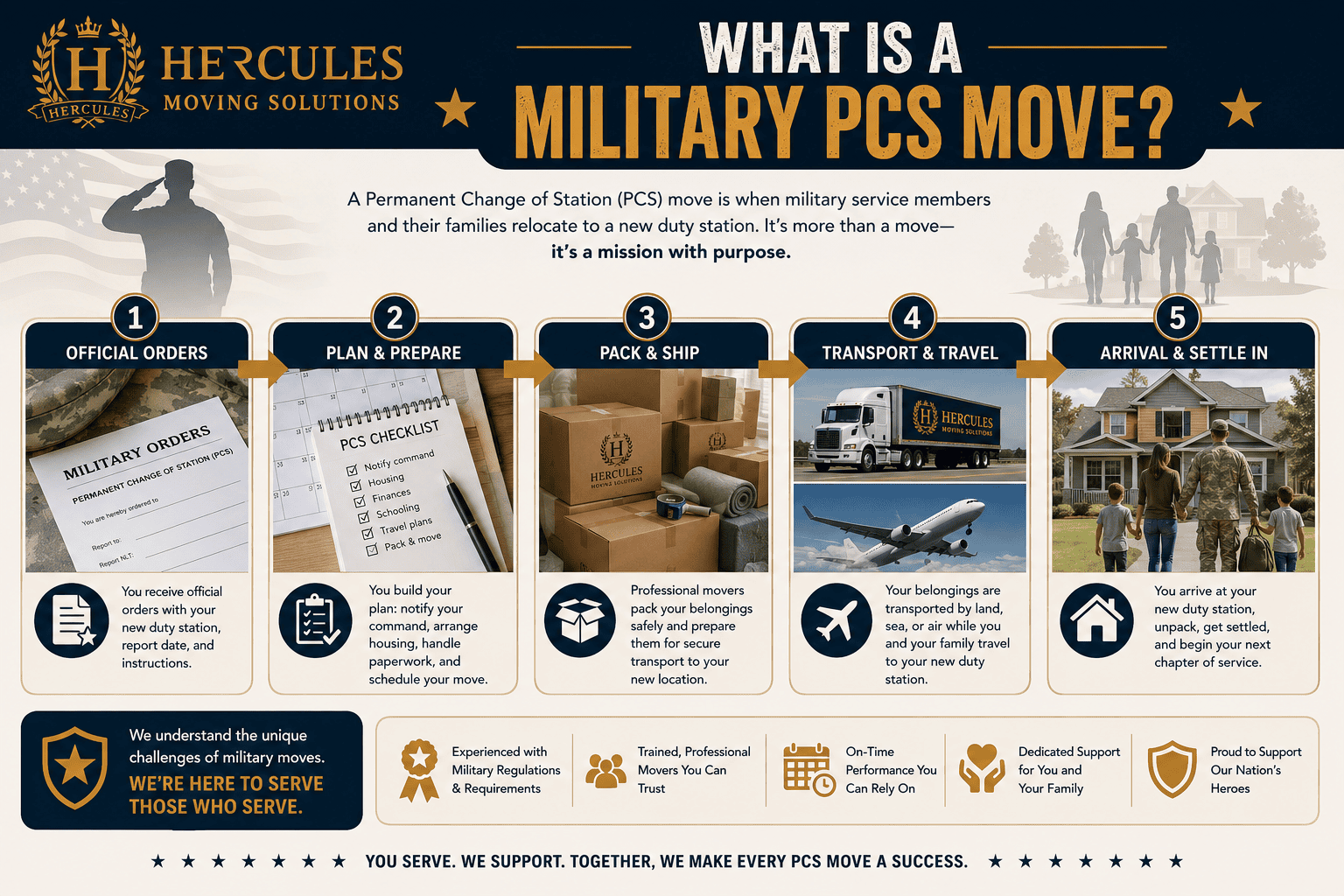
What Is a PCS Move and What Does It Cover?
A Permanent Change of Station, commonly called a PCS move, is an official relocation ordered by the U.S. military. Service members receive PCS orders when they are reassigned to a new permanent duty station.
Unlike temporary duty assignments (TDY), a PCS move usually involves relocating your household and establishing a new residence near your next assignment.
Depending on your orders, your relocation may take you:
- Across town
- To another state
- Across the country
- To Alaska or Hawaii
- To an overseas installation
Every PCS move is unique, but understanding the process ahead of time can help make your transition much smoother.
What is included in a PCS move?
Military PCS entitlements vary based on several factors, but they often include benefits related to:
- Household goods transportation
- Travel reimbursement
- Temporary lodging (when applicable)
- Shipment or storage of household belongings
- Vehicle transportation in certain situations
- Per diem allowances
- Dislocation Allowance (DLA), when authorized
Specific benefits depend on your military branch, orders, family status, destination, and current Department of Defense regulations.
Always review your official PCS orders and speak with your installation’s transportation office to confirm your individual entitlements.
Common types of PCS assignments
Military families may receive PCS orders for a variety of reasons, including:
- First duty station
- Reassignment to another installation
- Promotion requiring relocation
- Specialized training assignments
- Overseas assignments
- Returning from overseas
- Base realignment
Each assignment presents different planning considerations, particularly when moving long distances or across multiple states.
Why planning early matters
Military moves often involve strict reporting dates.
Starting preparations as soon as you receive official orders gives you more flexibility when scheduling transportation, organizing paperwork, and preparing your family for the move.
Early planning also helps you:
- Compare moving options.
- Organize important documents.
- Declutter before packing.
- Coordinate housing.
- Arrange school transfers.
- Prepare pets for travel.
- Schedule utilities.
The sooner you begin planning, the more control you’ll have throughout the relocation process.
Understanding military moving programs
The Department of Defense offers several moving options depending on your situation.
These generally include:
- Government-arranged moves
- Personally Procured Moves (PPM)
- Combination moves that use both options
Each approach has different responsibilities, reimbursement rules, and documentation requirements.
Choosing the option that best fits your family’s needs begins with understanding how each program works, which we’ll cover later in this guide.
PCS moves can feel overwhelming
Even experienced military families acknowledge that PCS moves require careful coordination.
You’re often balancing:
- Housing
- Employment changes for spouses
- School enrollment
- Healthcare transfers
- Financial planning
- Travel logistics
- Packing
- Administrative paperwork
Having a detailed relocation plan helps prevent important tasks from being overlooked.
Entitlements by Rank and Family Size
One of the most common questions during a PCS relocation is, “What does the military pay for?”
The answer depends on several factors.
Military moving entitlements are determined according to Department of Defense regulations and may vary based on:
- Rank
- Dependency status
- Duty location
- Type of move
- Official orders
- Transportation method
Because benefits can change over time, always verify your current entitlements through your installation’s transportation office or Military OneSource before making financial decisions.
Household goods weight allowances
One of the most important PCS benefits is the transportation of household goods.
The amount of household belongings eligible for shipment generally depends on your authorized weight allowance.
Factors affecting weight allowances include:
- Military rank
- Whether you have dependents
- Type of assignment
- Destination
Knowing your authorized weight limit helps prevent unexpected expenses if your shipment exceeds the permitted allowance.
Family size affects planning
Moving with a spouse or children naturally requires more preparation than relocating alone.
Families often need additional time to coordinate:
- School enrollment
- Childcare
- Medical records
- Housing availability
- Utility setup
- Travel schedules
Planning these details early helps reduce last-minute stress before your report date.
Travel reimbursements
Depending on your orders, eligible travel expenses may include:
- Mileage
- Per diem
- Lodging
- Transportation costs
Documentation is essential for reimbursement.
Keep organized records of:
- Receipts
- Travel confirmations
- Fuel expenses
- Lodging invoices
- Official orders
Maintaining a dedicated PCS folder makes filing paperwork much easier after your relocation.
Temporary lodging
In some situations, military families may qualify for temporary lodging benefits while transitioning between duty stations.
Eligibility depends on your assignment, location, and applicable military regulations.
If temporary housing may be part of your relocation, discuss available options with your installation’s relocation office before making reservations.
Special considerations for military families
PCS moves often affect more than transportation alone.
Military families may also need to coordinate:
- Spouse employment transitions
- Children’s education
- Healthcare providers
- Pet transportation
- Financial planning
- Vehicle registration
- Driver’s license requirements
Addressing these tasks early allows your family to settle into your new community more quickly after arrival.
Stay informed throughout the process
Military relocation policies occasionally change.
Rather than relying solely on previous PCS experience, review current guidance for every new assignment.
Reliable resources include:
- Your installation transportation office
- Military OneSource
- Defense Personal Property Program (DPS)
- Your chain of command
Staying informed helps ensure you’re making decisions based on the latest guidance available.
If your PCS move includes a long-distance relocation, our Long Distance Movers and Interstate Moving Services can help coordinate transportation while you focus on your family’s transition. You may also find our How to Choose Long Distance Moving Company blog helpful as you prepare for moving day.
Helpful external resources:
- Military OneSource offers comprehensive PCS planning tools, relocation checklists, and guidance for military families.
- The Defense Personal Property Program (DPS) provides official information about managing household goods shipments during a PCS.
- The Federal Motor Carrier Safety Administration (FMCSA) Ready to Move Guide offers valuable information about interstate moving rights and consumer protections.
Types of Military Moves: Government vs Personally Procured (PPM)
One of the first decisions you’ll make after receiving PCS orders is determining how your household goods will be moved.
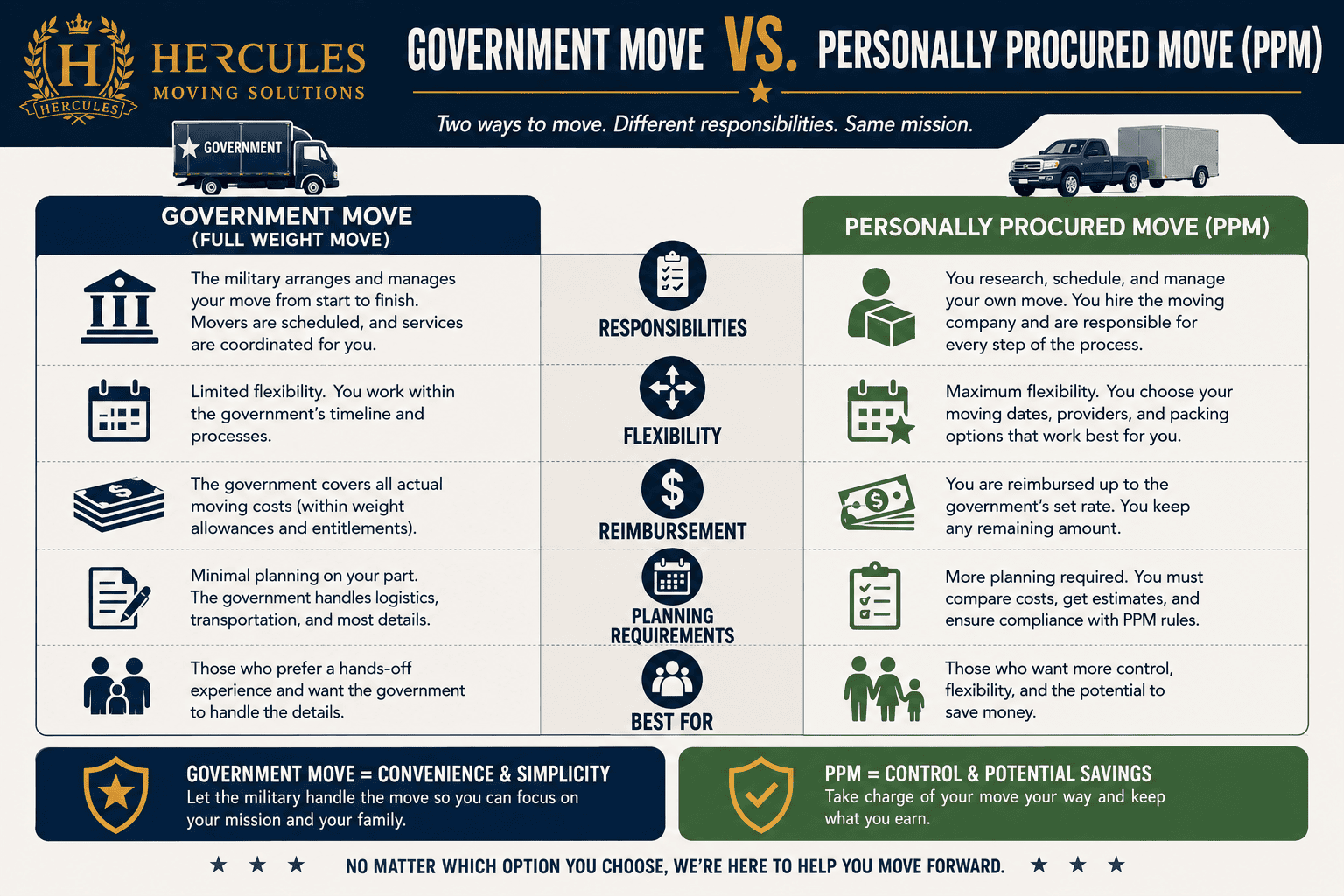
The Department of Defense offers several relocation options depending on your orders, eligibility, and personal preferences. Understanding these choices is an important part of any military relocation guide, as each option comes with different responsibilities, timelines, and reimbursement rules.
Before making a decision, discuss your situation with your installation’s transportation office to understand which option best fits your assignment.
Government-Arranged Move (GHC)
A government-arranged move, sometimes referred to as a Government Household Goods (GHC) move, is coordinated through the military’s relocation system.
In this type of move, the government arranges transportation for your authorized household goods through approved moving providers.
Many service members choose this option because much of the logistics are handled on their behalf.
Typical services may include:
- Packing household goods
- Loading and unloading
- Transportation
- Delivery scheduling
- Basic shipment coordination
Although the transportation is coordinated for you, it’s still important to:
- Review your inventory carefully.
- Keep important documents with you.
- Prepare an essentials bag.
- Understand your shipment timeline.
- Stay available for communication during pickup and delivery.
Being actively involved helps ensure a smoother moving experience.
Personally Procured Move (PPM)
A Personally Procured Move (PPM), formerly known as a DITY (Do-It-Yourself) move, allows eligible service members to arrange their own relocation instead of using a government-arranged shipment.
With a PPM, you have greater control over how your move is completed.
Depending on your situation, you may choose to:
- Rent a moving truck
- Hire a commercial moving company
- Use portable storage containers
- Move part or all of your household yourself
If your move qualifies, reimbursement is generally based on current military regulations and the weight of your authorized shipment.
Because reimbursement rules may change, always verify current guidance before making financial commitments.
Partial PPM
Some military families choose a combination approach.
For example, the government may transport the majority of household goods while you personally move:
- Valuable belongings
- Clothing
- Electronics
- Important documents
- Family heirlooms
- Frequently used household items
This option can provide additional flexibility while still taking advantage of government-arranged transportation.
Which option is right for you?
Every PCS move is different.
Factors that often influence the decision include:
- Distance of the move
- Family size
- Reporting timeline
- Household size
- Budget considerations
- Personal preferences
- Housing availability
Discussing your options early allows you to make informed decisions before scheduling transportation.
Choosing the right moving method can help reduce stress while ensuring your relocation aligns with your family’s needs.
How to File a PPM / DITY Claim
If you choose a Personally Procured Move, careful recordkeeping is essential.
Submitting complete documentation helps ensure your reimbursement request can be processed according to current military guidelines.
Although procedures may vary, most PPM claims require accurate records throughout your relocation.
Before your move
After receiving PCS orders, work with your installation’s transportation office to obtain approval and understand the current requirements.
Before moving day, you may need to:
- Register your PPM.
- Review reimbursement guidance.
- Confirm authorized weight allowances.
- Understand required documentation.
- Schedule certified weight tickets if applicable.
Starting the process early helps avoid delays later.
Keep organized documentation
Throughout your relocation, maintain copies of important records, including:
- Official PCS orders
- Weight tickets
- Rental agreements
- Moving contracts
- Fuel receipts
- Toll receipts
- Lodging receipts
- Equipment rentals
Keeping paperwork organized in one folder makes filing your claim much easier.
Submit paperwork promptly
Once your move is complete, follow your branch’s procedures for submitting reimbursement documentation.
Submitting complete and accurate paperwork as soon as possible helps reduce delays in processing.
If you’re uncertain about any requirement, your transportation office is the best source for current guidance.
Understand reimbursement requirements
Military reimbursement policies occasionally change.
Rather than relying on previous PCS experiences or advice from other service members, verify current procedures using official military resources.
Military OneSource and your installation transportation office can provide the latest information regarding:
- Eligible expenses
- Required documentation
- Filing deadlines
- Current reimbursement policies
Staying informed helps prevent costly mistakes during your PCS.
How to Use Your Military Moving Allowance With Hercules
Some military families who choose a Personally Procured Move prefer to work with a professional moving company instead of handling every aspect of the relocation themselves.
Professional moving services can reduce the physical demands of packing, loading, transportation, and unloading while allowing you to remain in control of your move.
At Hercules Moving Solutions, we coordinate long-distance relocations through a nationwide network of licensed and experienced moving carriers, helping military families move efficiently between duty stations.
Professional assistance for PPM moves
Depending on your relocation plan, professional moving services may include:
- Household packing
- Furniture protection
- Loading and unloading
- Long-distance transportation
- Storage coordination
- Specialty item handling
Every military relocation is different, so it’s important to discuss your needs with your moving coordinator before scheduling services.
Planning around your PCS schedule
Military reporting dates often leave little room for unexpected delays.
Scheduling your move as early as possible provides greater flexibility when arranging:
- Pickup dates
- Delivery windows
- Housing availability
- Travel plans
- Temporary lodging
Early scheduling also increases the likelihood of securing your preferred moving dates during busy PCS seasons.
Keep your important documents with you
Regardless of how your household goods are transported, certain items should always travel with you rather than in the moving shipment.
Examples include:
- PCS orders
- Military identification
- Passports
- Medical records
- Financial documents
- Prescription medications
- Laptops
- Valuable jewelry
Keeping these essentials with you reduces unnecessary stress throughout your relocation.
Coordinate with your transportation office
If you’re using your military moving allowance alongside professional moving services, maintain communication with your transportation office throughout the process.
They can help clarify:
- Documentation requirements
- Eligibility questions
- Reimbursement procedures
- Authorized services
- Current military regulations
Having clear guidance from official sources helps ensure your move stays on track.
Moving From Base to Base: CONUS PCS Planning
Many PCS relocations occur within the continental United States (CONUS).
Although these moves don’t involve international shipping, they still require careful coordination.
Planning ahead can make moving between duty stations much more manageable.
Confirm your reporting timeline
As soon as you receive official orders, review:
- Report-no-later-than dates
- Leave authorization
- Travel days
- Housing availability
- School calendars
Knowing these dates helps you build a realistic moving schedule.
Research your new installation
Before arriving, learn about your new duty station.
Helpful topics include:
- Base housing
- Nearby neighborhoods
- Healthcare facilities
- Commissary locations
- Schools
- Childcare
- Recreation facilities
Familiarizing yourself with the area before arrival can make your transition smoother.
Coordinate housing early
Housing availability varies significantly between installations.
Whether you plan to:
- Live on base
- Rent off base
- Purchase a home
Starting your housing search early gives you more options and reduces last-minute pressure.
Prepare your family
Military relocations affect every member of the household.
Help your family prepare by:
- Discussing the move openly.
- Researching your new community together.
- Involving children in planning.
- Creating a moving checklist.
- Setting realistic expectations.
A positive, organized approach often helps everyone adjust more comfortably.
If you’re preparing for a PCS relocation, our Military Movers, Long Distance Movers, and Interstate Moving Services can help coordinate your move.
PCS Moving Timeline: What to Do and When
One of the best ways to reduce the stress of a military relocation is to create a timeline as soon as you receive your PCS orders. While every assignment is different, having a structured plan helps you stay organized and ensures important tasks aren’t overlooked.
This section of our military PCS moving guide outlines a general timeline that many service members can use as a starting point. Be sure to adjust it based on your reporting date, installation requirements, and official guidance from your transportation office.
As Soon as You Receive PCS Orders
The first few days after receiving orders are the ideal time to begin planning.
Start by:
- Reviewing your PCS orders carefully
- Contacting your installation transportation office
- Deciding whether you’ll use a government-arranged move or a Personally Procured Move (PPM)
- Researching housing options near your new duty station
- Creating a moving folder for important documents
- Building a moving budget
Starting early gives you more flexibility when scheduling transportation and preparing your family.
Six to Eight Weeks Before Moving
This is when planning becomes more detailed.
Focus on:
- Booking your move
- Decluttering your home
- Organizing important paperwork
- Scheduling school transfers
- Requesting medical and veterinary records
- Researching your new community
- Notifying your landlord if applicable
If you’re using a professional moving company, this is also a good time to confirm your preferred pickup dates.
Three to Four Weeks Before Moving
As moving day gets closer, begin preparing your household.
Tasks may include:
- Packing non-essential belongings
- Labeling boxes clearly
- Confirming travel reservations
- Scheduling utility disconnections and new service activation
- Arranging childcare or pet care for moving day
- Confirming housing availability
Completing these items early helps reduce last-minute pressure.
One Week Before Moving
Your attention should now shift toward final preparations.
Complete tasks such as:
- Packing an essentials bag
- Confirming your moving schedule
- Preparing important documents
- Cleaning your home
- Emptying refrigerators and freezers
- Charging electronic devices
Keeping your essentials with you ensures you’ll have everything you need during travel.
Moving Day
On moving day:
- Be available during loading.
- Review the inventory carefully.
- Keep valuables with you.
- Verify contact information.
- Perform a final walkthrough.
- Lock windows and doors before leaving.
Taking a few extra minutes to inspect your home can prevent forgotten items from being left behind.
After Arrival
Once you reach your new duty station:
- Inspect your shipment during delivery.
- Compare your inventory.
- Report any concerns promptly.
- Unpack essential rooms first.
- Set up utilities.
- Update your address if needed.
- Explore your new community.
Settling in gradually often feels much less overwhelming than trying to unpack your entire home immediately.
Overseas PCS Moves: Additional Considerations
While many military relocations occur within the continental United States (CONUS), some service members receive orders to overseas duty stations.
International PCS moves involve additional planning, documentation, and shipping requirements beyond those of domestic relocations.
Begin preparations early
International assignments often require extra processing time.
Depending on your destination, you may need to arrange:
- Passports
- Visas
- Medical screenings
- Immunizations
- Customs documentation
- Pet import requirements
Beginning these tasks as soon as possible helps prevent delays.
Understand shipment limitations
Not every overseas assignment allows the same household goods shipment as a domestic PCS.
Depending on your destination, you may receive guidance regarding:
- Household goods shipments
- Unaccompanied baggage
- Temporary storage
- Long-term storage
- Vehicle shipment eligibility
Review your orders carefully and discuss shipment options with your transportation office.
Research your destination
Learning about your new location before arrival helps make the transition smoother.
Consider researching:
- Local climate
- Housing
- Transportation
- Schools
- Currency
- Healthcare
- Cultural customs
Becoming familiar with your destination can reduce uncertainty and help your family adjust more quickly.
Prepare for longer transit times
International shipments often take longer than domestic moves.
Pack an extended essentials kit that includes:
- Clothing
- Medications
- Electronics
- Chargers
- Children’s necessities
- Personal documents
Having these items available during the transition makes waiting for your shipment much more manageable.
Protecting Your Belongings During a Military Relocation
Whether your move is government-arranged or personally managed, protecting your belongings should remain a top priority.
Preparation before moving day helps reduce the likelihood of damage and makes unpacking easier after arrival.
Create a home inventory
Before anything is packed, document your belongings.
Consider recording:
- Furniture
- Electronics
- Appliances
- Artwork
- Jewelry
- Collectibles
- Musical instruments
Photographs and videos can provide valuable documentation for your personal records.
Pack valuables separately
Certain items should always travel with you rather than in your household shipment.
These typically include:
- Military documents
- Identification
- Passports
- Financial records
- Prescription medications
- Laptops
- Family heirlooms
- Valuable jewelry
Keeping these essentials nearby gives you peace of mind throughout your relocation.
Label boxes clearly
Good labeling makes unpacking significantly easier.
Include information such as:
- Room destination
- General contents
- Fragile items
- Priority boxes
A simple labeling system saves time when settling into your new home.
Inspect your shipment upon delivery
When your belongings arrive:
- Compare items with your inventory.
- Check furniture carefully.
- Test electronics when practical.
- Photograph any visible concerns.
- Report issues according to applicable procedures.
Addressing concerns promptly helps ensure they are documented appropriately.
Common Military PCS Moving Mistakes to Avoid
Even experienced military families occasionally encounter avoidable challenges during relocation.
Learning from common mistakes can make your next PCS much smoother.
Waiting too long to start planning
The earlier you begin preparing, the more options you’ll have for transportation, housing, and scheduling.
Starting early reduces unnecessary stress throughout your move.
Ignoring your weight allowance
Understanding your authorized household goods allowance helps prevent unexpected expenses.
Review your current entitlement before deciding what to move.
Forgetting important paperwork
Keep copies of:
- PCS orders
- Travel documents
- Medical records
- Housing paperwork
- Financial information
- Moving contracts
Store both physical and digital copies whenever possible.
Packing essential items with household goods
Always travel with items you’ll need immediately after arrival.
Your essentials bag should include:
- Several days of clothing
- Toiletries
- Prescription medications
- Chargers
- Children’s comfort items
- Pet supplies
- Important documents
Underestimating travel time
Leave room for unexpected delays caused by weather, traffic, or other travel interruptions.
Building flexibility into your schedule can reduce unnecessary pressure.
Not asking questions
Military relocation offices exist to help service members navigate the PCS process.
If something is unclear, ask questions before making decisions.
Accurate information from official sources can prevent costly mistakes later.
If your relocation includes a long-distance household move, Hercules Moving Solutions can help coordinate transportation through our nationwide network of experienced moving carriers. Our Military Movers, Long Distance Movers, and Interstate Moving Services are designed to help simplify every stage of your relocation.
Book Your Military PCS Move With Hercules—We Understand Military Relocation
Military families relocate more often than most households, and every PCS brings new responsibilities, deadlines, and logistical challenges.
Whether you’re moving across the state or across the country, careful planning and experienced support can make your transition much smoother.
At Hercules Moving Solutions, we coordinate long-distance relocations through a trusted network of licensed and experienced moving carriers. We understand the importance of reliable scheduling, clear communication, and professional service during military relocations.
Request your free moving quote today and let Hercules Moving Solutions help you prepare for your next PCS with confidence.
Frequently Asked Questions
What is the difference between a government move and a PPM for military?
A government-arranged move is coordinated through the military’s transportation program, while a Personally Procured Move (PPM) allows eligible service members to arrange their own move and potentially receive reimbursement according to current military regulations.
How much does the military pay for a PCS move?
Military moving benefits depend on your orders, rank, dependency status, destination, and current Department of Defense policies. Your installation transportation office can explain the entitlements that apply to your specific situation.
Can I use my moving allowance with a private moving company like Hercules?
If you’re completing an authorized Personally Procured Move (PPM), you may choose to work with a professional moving company. Always confirm eligibility and reimbursement requirements with your transportation office before scheduling services.
How far in advance should I book a PCS move?
As soon as you receive official PCS orders. Early scheduling provides more flexibility, especially during peak military moving season.
What items are not covered by military moving entitlements?
Coverage varies based on current military regulations and your specific orders. Your transportation office can explain shipment restrictions, prohibited items, and any applicable weight limitations.
What documents should I keep with me during a PCS move?
Carry important documents such as your PCS orders, military ID, passports, financial records, medical records, prescription medications, and other essential paperwork rather than packing them with household goods.
How can I prepare my children for a PCS relocation?
Talk openly about the move, involve them in age-appropriate planning, maintain familiar routines when possible, and help them learn about their new community before arrival.
What should I do if my household goods are delayed?
Keep essential items with you during travel, stay in contact with your transportation provider, and follow guidance from your transportation office regarding shipment updates.
How can I stay organized during a military relocation?
Create a moving checklist, keep all paperwork in one place, maintain digital copies of important documents, and complete tasks gradually according to your PCS timeline.
Where can I find official information about PCS benefits?
Reliable sources include your installation transportation office, Military OneSource, the Defense Personal Property Program (DPS), and your chain of command.