A long-distance move is more than transporting boxes from one home to another. It’s a major life transition that often involves leaving behind familiar routines, managing countless logistics, making financial decisions, and adapting to a completely new environment.
If you’re experiencing long distance moving stress, you’re certainly not alone. Many people find interstate relocations emotionally and mentally demanding because they combine several significant life changes into a relatively short period of time.
The good news is that while you may not be able to eliminate every challenge, you can reduce stress by planning ahead, staying organized, and asking for help when you need it.
At Hercules Moving Solutions, we coordinate interstate relocations through a trusted network of licensed and experienced moving carriers across the United States. Over the years, we’ve seen that successful moves aren’t just about transporting belongings safely. They’re also about helping families feel more confident and prepared throughout the entire relocation process.
In this guide, you’ll learn why long-distance moves often feel overwhelming, what causes the most stress, and practical strategies that can help you stay focused from the first packing box to settling into your new home.
Why Long Distance Moves Are Among Life’s Most Stressful Events
Moving affects nearly every part of your daily life at once.
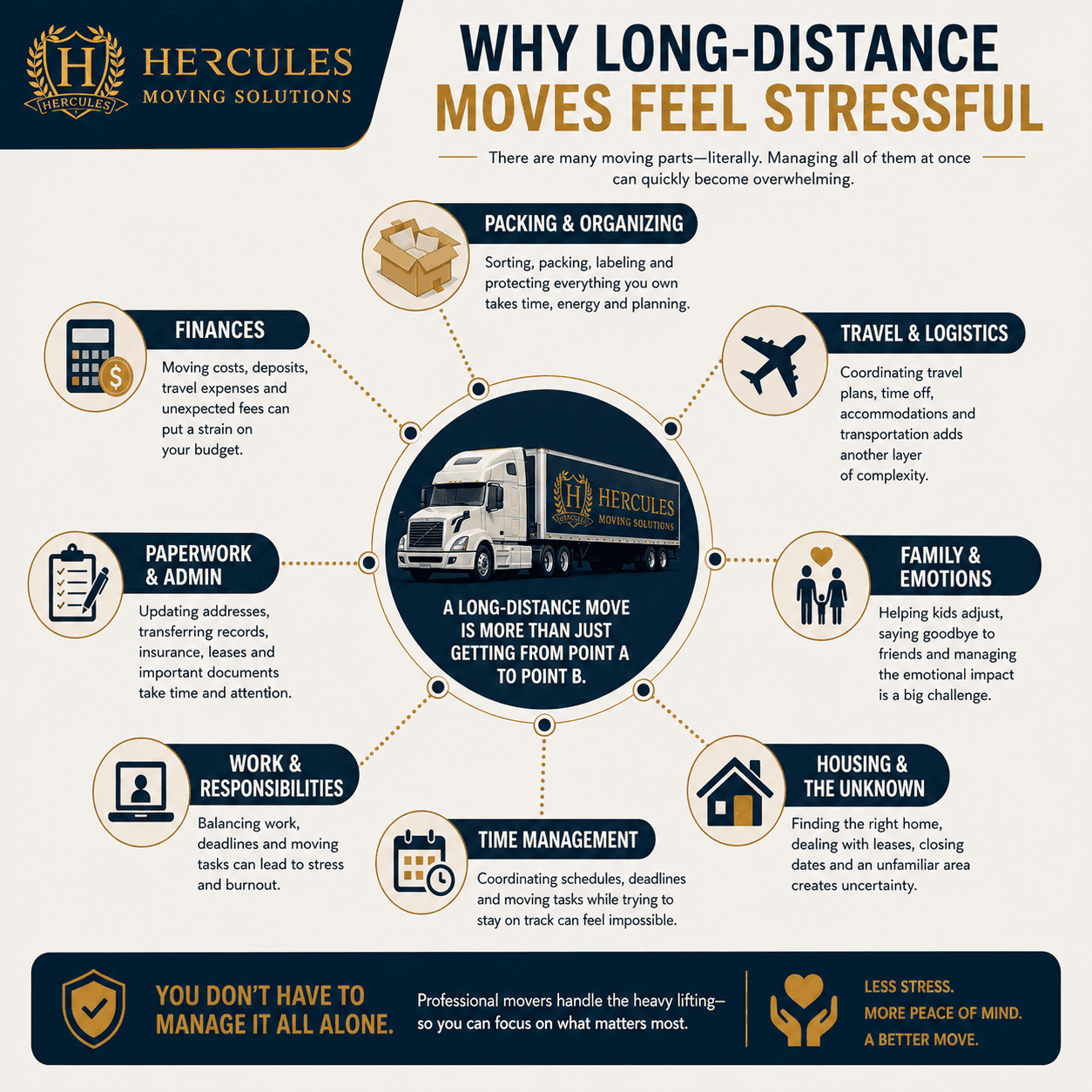
Unlike many other major life events, relocation often requires you to manage housing, finances, employment, travel, family responsibilities, and countless small decisions simultaneously.
When these responsibilities build up, it’s understandable that many people experience moving anxiety long distance before the moving truck even arrives.
Moving combines multiple major life changes
A long-distance relocation often involves:
- Selling or leaving a home
- Finding a new place to live
- Packing an entire household
- Changing jobs or work routines
- Adjusting finances
- Transferring utilities
- Updating addresses
- Learning a new community
- Leaving friends and neighbors
- Helping children or pets adjust
Each task may seem manageable on its own, but together they can create significant mental and emotional pressure.
Uncertainty increases stress
One reason interstate moves feel so overwhelming is that many details remain uncertain until the process is complete.
You may wonder:
- Will everything arrive safely?
- How long will delivery take?
- Will my new neighborhood feel like home?
- What unexpected expenses could come up?
- How will my children adjust?
- Will I remember everything on my checklist?
These questions are common, especially during your first long-distance move.
Recognizing uncertainty as a normal part of relocation can help you approach the process with more realistic expectations.
Decision fatigue is real
One challenge many people don’t anticipate is the sheer number of decisions involved in moving.
Every day may include choices about:
- What to keep
- What to donate
- What to sell
- Packing supplies
- Travel arrangements
- Utility transfers
- Moving dates
- Storage options
- Insurance coverage
- Budget priorities
Making dozens of decisions every day can become mentally exhausting.
Whenever possible, simplify the process by making decisions in small batches instead of trying to solve everything at once.
Emotional stress is just as important as physical work
Packing boxes is only one part of moving.
Many people also experience emotions such as:
- Excitement
- Sadness
- Anxiety
- Uncertainty
- Frustration
- Nostalgia
- Hope
It’s common to feel several of these emotions at the same time.
Acknowledging those feelings instead of ignoring them can make the adjustment process much healthier.
Stress affects everyone differently
Some people become highly organized during a move.
Others may feel distracted or overwhelmed.
Common reactions include:
- Difficulty sleeping
- Trouble concentrating
- Feeling emotionally drained
- Increased irritability
- Forgetfulness
- Reduced motivation
These responses don’t necessarily mean something is wrong. They often reflect the demands of managing a major life transition.
If you begin preparing several weeks in advance, many of these challenges become much easier to manage.
The Pre-Move Overwhelm: How to Break It Into Manageable Steps
One of the biggest contributors to how to cope with moving stress is learning how to avoid trying to do everything at once.
Many homeowners underestimate the amount of preparation required for an interstate move. Then, as moving day approaches, the growing list of unfinished tasks begins to feel overwhelming.
Fortunately, breaking your relocation into smaller, manageable steps can make the entire process feel much more achievable.
Start earlier than you think you need to
One of the simplest ways to reduce moving stress is to give yourself extra time.
Beginning your preparations six to eight weeks before moving day allows you to complete tasks gradually instead of rushing through everything during the final week.
Early planning gives you time to:
- Compare moving companies
- Gather estimates
- Declutter your home
- Donate unwanted belongings
- Order packing supplies
- Organize paperwork
- Schedule utility transfers
- Plan travel arrangements
Small amounts of progress each week often feel much less stressful than trying to accomplish everything at the last minute.
Create a master moving checklist
A written checklist turns dozens of scattered responsibilities into a clear action plan.
Instead of remembering everything mentally, organize your move into categories such as:
- Home preparation
- Packing
- Financial tasks
- Travel planning
- Address changes
- Utilities
- School transfers
- Healthcare
- Moving day
- Arrival tasks
Crossing off completed items creates a visible sense of progress that can help reduce feelings of being overwhelmed.
Focus on one room at a time
Packing an entire house sounds intimidating.
Packing one closet feels much more manageable.
Rather than looking at your home as one enormous project, divide it into smaller sections.
For example:
Week 1:
- Guest bedroom
- Storage closet
Week 2:
- Dining room
- Home office
Week 3:
- Kitchen cabinets
- Garage
This room-by-room approach keeps the workload more balanced throughout the moving timeline.
Declutter before you pack
Every item you decide not to move saves time, labor, packing materials, and transportation costs.
As you prepare, separate belongings into categories:
- Keep
- Donate
- Sell
- Recycle
- Dispose
Many homeowners discover they own far more than they actually use.
Reducing unnecessary belongings can make packing feel significantly more manageable.
Set realistic daily goals
Avoid trying to complete your entire moving checklist in a single weekend.
Instead, create smaller daily objectives such as:
- Pack five boxes.
- Update your mailing address.
- Schedule utility transfers.
- Donate one carload of items.
- Research your new neighborhood.
- Confirm moving dates.
Completing a few achievable tasks each day builds momentum while reducing mental fatigue.
Ask for help before you need it
Moving doesn’t have to be a one-person project.
Friends and family may be able to help with:
- Childcare
- Pet care
- Packing
- Cleaning
- Donations
- Organizing
- Running errands
Professional movers can also take much of the physical work off your shoulders, allowing you to focus on the many personal responsibilities that come with relocating.
If your schedule is especially busy, consider adding Packing Services to your relocation plan so experienced professionals can help prepare your household efficiently.
Celebrate progress instead of perfection
It’s easy to focus on everything that’s left to do.
Instead, take time to recognize what you’ve already accomplished.
Every completed task moves you one step closer to your new home.
Celebrating these small wins can improve motivation and help keep stress from building throughout the moving process.
If you’re planning an interstate relocation, our Long Distance Movers and Interstate Moving Services can help simplify the logistics while you focus on preparing yourself and your family.
Helpful external resources:
- The Federal Motor Carrier Safety Administration (FMCSA) Ready to Move Guide explains your rights and responsibilities during an interstate move and provides practical planning advice.
- The American Psychological Association (APA) offers evidence-based resources on managing stress during major life transitions and building healthy coping strategies.
The Root Causes of Long Distance Moving Stress
Feeling stressed during a move isn’t simply about having too many boxes to pack.
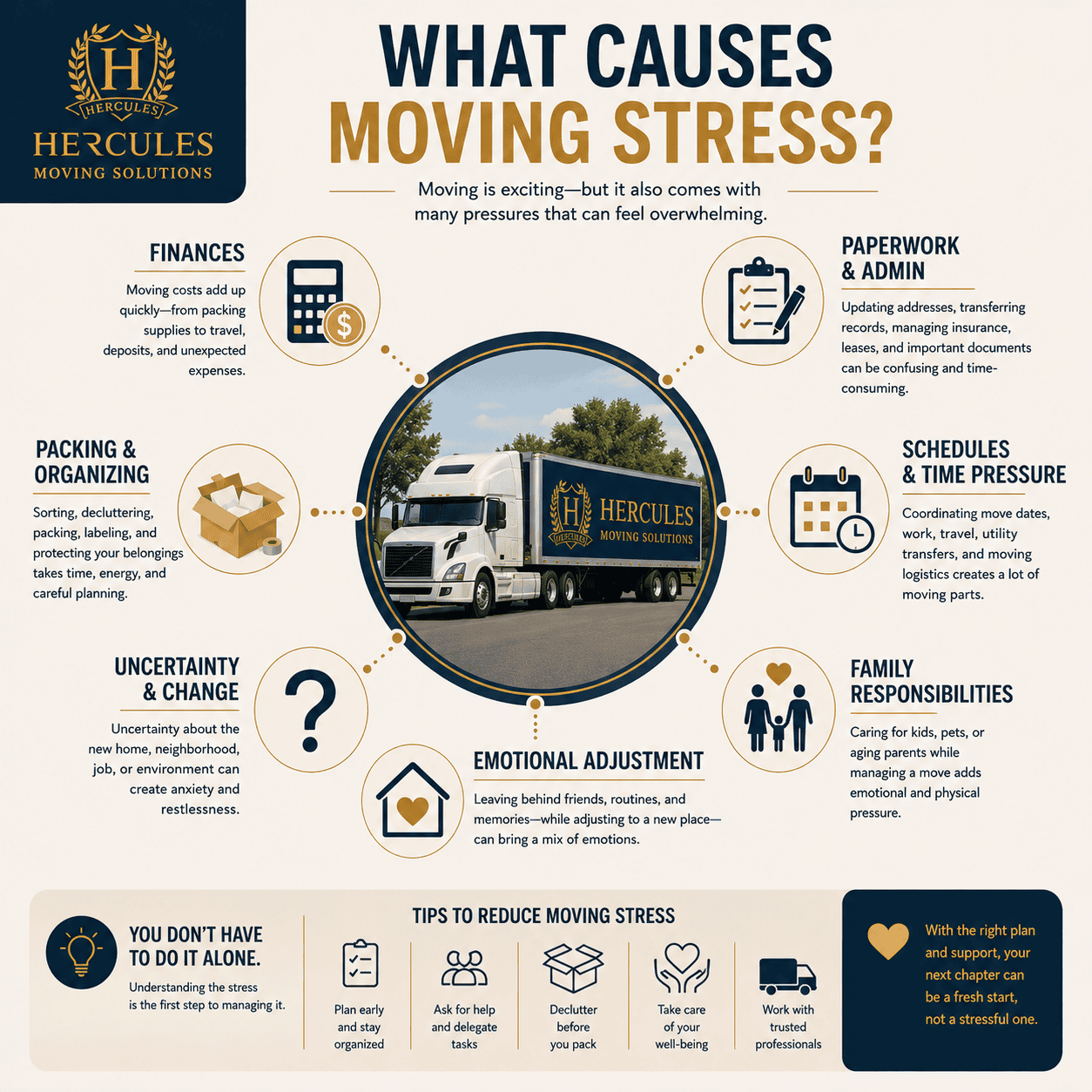
In most cases, long distance moving stress comes from several challenges happening at the same time. Understanding what’s causing that stress can make it easier to develop practical strategies for managing it.
Whether you’re relocating for work, family, or a fresh start, recognizing the biggest sources of stress helps you prepare both mentally and logistically.
Uncertainty about the moving timeline
Unlike local moves that are often completed in a single day, interstate relocations usually involve more moving parts.
Questions about transportation, delivery schedules, weather, and travel can leave homeowners feeling like they’re constantly waiting for the next update.
Common concerns include:
- When will the moving truck arrive?
- How long will my belongings be in transit?
- Will there be delays?
- What if my new home isn’t ready yet?
- How should I prepare if plans change?
Having a flexible mindset and discussing timelines with your moving coordinator before moving day can help reduce uncertainty.
Financial pressure
Moving long distance involves more than transportation costs.
Many families also need to budget for:
- Security deposits
- Closing costs
- Temporary housing
- Utility connections
- Fuel
- Hotels
- Meals
- Storage
- Packing supplies
- New furniture
Creating a realistic moving budget early in the planning process helps reduce financial surprises later.
Fear of forgetting something
Many people worry they’ll overlook an important detail.
Common concerns include:
- Forgetting to change an address
- Missing paperwork
- Leaving belongings behind
- Overlooking utility transfers
- Losing important documents
A detailed checklist helps transform these worries into manageable tasks.
Emotional attachment to home
Moving isn’t only about changing locations.
For many families, it’s also about saying goodbye to:
- Neighbors
- Friends
- Favorite restaurants
- Schools
- Daily routines
- Familiar neighborhoods
Even positive moves often involve a sense of loss.
Giving yourself permission to acknowledge those emotions can make the transition feel healthier.
Balancing everyday responsibilities
Life doesn’t pause while you’re preparing for a move.
Many people are simultaneously managing:
- Full-time jobs
- Children’s schedules
- Pet care
- Household responsibilities
- Medical appointments
- School activities
Trying to balance normal life with moving preparation is one of the biggest reasons people begin feeling overwhelmed.
Too much information at once
Researching movers, insurance, housing, travel, schools, neighborhoods, and utility companies can create information overload.
Instead of trying to solve every problem immediately, prioritize tasks based on your moving timeline.
Breaking responsibilities into weekly goals often feels much more manageable than tackling everything at once.
Managing Uncertainty: Delivery Windows and the Unknown
One of the biggest differences between local and interstate moving is that long-distance deliveries often occur within delivery windows rather than at an exact time.
For many homeowners, this uncertainty becomes one of the most stressful parts of relocation.
Why delivery windows exist
Interstate moving trucks often travel long distances while serving multiple customers across different states.
Factors that may influence delivery schedules include:
- Driving regulations
- Weather conditions
- Road construction
- Traffic
- Distance between deliveries
- Safety requirements
These variables help explain why delivery windows are common throughout the long-distance moving industry.
Prepare for flexibility
Instead of expecting everything to happen on a precise schedule, prepare for a range of possible arrival dates.
Planning ahead may include:
- Packing an essentials suitcase
- Keeping important medications with you
- Carrying work equipment separately
- Bringing chargers and important electronics
- Packing enough clothing for several days
Being prepared for a short delay often reduces unnecessary stress if your household shipment arrives later than expected.
Stay in communication
One of the easiest ways to reduce uncertainty is by maintaining regular communication with your moving coordinator.
Before moving day, ask questions such as:
- What delivery window should I expect?
- How will I receive updates?
- Who should I contact with questions?
- What happens if delays occur?
Understanding the communication process can help you feel more informed throughout your relocation.
Focus on what you can control
It’s natural to worry about situations outside your control.
Instead of focusing exclusively on delivery timing, direct your attention toward tasks you can complete.
For example:
- Set up utilities.
- Prepare your new home.
- Explore the neighborhood.
- Update your driver’s license if required.
- Register children for school.
- Organize important paperwork.
Completing these tasks creates a sense of progress while you wait for your belongings to arrive.
Build flexibility into your expectations
Every long-distance move is unique.
Approaching your relocation with realistic expectations instead of expecting everything to go perfectly can reduce frustration when minor adjustments become necessary.
Flexibility doesn’t eliminate challenges, but it often makes them easier to manage.
Practical Strategies to Reduce Moving Anxiety
Although every relocation comes with some uncertainty, there are many practical steps you can take to reduce moving anxiety long distance before, during, and after your move.
Rather than trying to eliminate stress completely, focus on creating routines and habits that help you feel more prepared and in control.
Create a realistic moving schedule
A detailed timeline helps transform a large project into smaller, manageable tasks.
Instead of thinking about everything that needs to be done, organize responsibilities week by week.
Your schedule might include:
- Decluttering one room at a time
- Ordering packing supplies
- Scheduling utility transfers
- Confirming moving dates
- Updating your address
- Packing seasonal belongings first
Completing small tasks consistently often feels much less overwhelming than trying to finish everything at once.
Stay organized with one moving folder
Keeping important information in one location reduces unnecessary stress.
Store copies of:
- Moving estimates
- Contracts
- Receipts
- Inventory lists
- Utility confirmations
- Hotel reservations
- School records
- Medical documents
Whether you choose a physical folder, a digital file, or both, having everything organized saves time when questions arise.
Prioritize sleep, meals, and hydration
During busy moving weeks, it’s easy to neglect basic self-care.
However, maintaining healthy routines often improves decision-making and emotional resilience.
Try to:
- Eat regular meals.
- Drink plenty of water.
- Get adequate sleep.
- Take short breaks while packing.
- Stretch after lifting boxes.
Small habits can have a meaningful impact on your overall stress level.
Accept that perfection isn’t realistic
Many homeowners hope every detail of their move will go exactly according to plan.
In reality, most relocations involve at least a few unexpected adjustments.
Rather than aiming for a perfect move, focus on being well prepared and adaptable.
This mindset often makes unexpected changes feel much less overwhelming.
Celebrate progress
As you complete important milestones, take a moment to recognize your accomplishments.
Celebrate achievements such as:
- Finishing a room
- Donating unwanted items
- Completing your moving checklist
- Booking your movers
- Arriving safely at your new home
Recognizing progress helps maintain motivation throughout the relocation process.
Moving Stress for Couples and Families
A long-distance move affects everyone in the household differently.
Parents may worry about finances, while children focus on leaving friends. One partner may enjoy organizing, while the other feels emotionally attached to the family home.
Recognizing these different perspectives can help families work together more effectively.
Divide responsibilities fairly
Instead of expecting one person to manage every aspect of the move, assign responsibilities based on each person’s strengths.
Examples include:
- Scheduling movers
- Managing finances
- Packing specific rooms
- Supervising children
- Coordinating travel
- Organizing paperwork
Sharing responsibilities reduces the likelihood of burnout.
Communicate regularly
Short daily check-ins help prevent misunderstandings.
Discuss topics such as:
- What has already been completed
- What still needs attention
- Upcoming deadlines
- Questions or concerns
- Changes to the moving schedule
Keeping everyone informed reduces unnecessary tension.
Give children age-appropriate responsibilities
Involving children in the moving process often helps them feel more secure.
Depending on their age, they can:
- Pack favorite toys
- Label boxes
- Choose decorations for their new room
- Prepare a travel backpack
- Help plan the first family activity after arriving
These small responsibilities encourage participation without creating additional pressure.
Make time for breaks together
Packing every free moment can quickly lead to exhaustion.
Schedule opportunities to relax together by:
- Watching a movie
- Sharing dinner
- Going for a walk
- Playing board games
- Visiting a favorite local park before moving
Maintaining family connections throughout the relocation reminds everyone that the move is about creating a new home together, not simply completing a long to-do list.
How the Right Moving Company Dramatically Reduces Stress
One of the most effective ways to reduce long distance moving stress is to choose a moving company that communicates clearly, stays organized, and helps you understand what to expect throughout the relocation process.
While no move is completely free of challenges, working with experienced professionals can eliminate much of the uncertainty that causes unnecessary anxiety.
At Hercules Moving Solutions, we coordinate long-distance relocations through a nationwide network of licensed and experienced moving carriers. Our goal is to help simplify the planning process while connecting customers with trusted transportation providers across the United States.
Clear communication builds confidence
One of the biggest sources of moving anxiety is not knowing what’s happening next.
A reliable moving company helps reduce uncertainty by explaining:
- The moving timeline
- Pickup procedures
- Delivery windows
- Valuation coverage options
- Required documentation
- Communication throughout the move
Knowing what to expect allows you to spend less time worrying and more time preparing.
Professional planning saves time
Experienced movers can help coordinate many of the logistical details that often overwhelm homeowners.
Depending on your moving plan, professional services may include:
- Packing assistance
- Loading and unloading
- Furniture protection
- Inventory management
- Specialty item handling
- Storage coordination
Having experienced professionals manage these responsibilities allows you to focus on work, family, and your transition into a new home.
Organization reduces last-minute surprises
Successful long-distance moves are built on preparation.
Professional moving coordinators often encourage customers to:
- Confirm important dates early.
- Review paperwork in advance.
- Create an inventory.
- Discuss specialty items.
- Prepare access at both locations.
- Ask questions before moving day.
Planning ahead reduces the likelihood of unexpected issues during your relocation.
Expertise matters
Long-distance moves involve different regulations, transportation schedules, and logistical considerations than local moves.
Working with experienced interstate movers means you’ll have guidance from professionals who understand:
- Interstate transportation requirements
- Long-distance packing techniques
- Delivery scheduling
- Valuation coverage options
- Specialty item handling
- Multi-state coordination
That experience often translates into a smoother moving process from beginning to end.
Financial Anxiety Around Moving Costs
For many families, finances are one of the biggest sources of moving anxiety long distance.
Beyond the cost of transportation itself, relocating often involves numerous additional expenses that can quickly add up.
Creating a realistic budget before moving day helps reduce uncertainty and gives you a clearer picture of what to expect.
Understand the full cost of your move
A long-distance relocation may include expenses such as:
- Moving services
- Packing materials
- Travel costs
- Fuel
- Hotel stays
- Meals
- Utility deposits
- Storage
- Cleaning services
- Home repairs
- Pet transportation
Planning for these costs ahead of time makes it easier to avoid unexpected financial pressure.
Build a moving budget
Creating a written budget helps you prioritize spending and monitor expenses throughout the relocation.
Many homeowners find it helpful to organize costs into categories such as:
| Category | Examples |
|---|---|
| Moving Services | Transportation, loading, unloading |
| Packing | Boxes, tape, protective materials |
| Travel | Hotels, fuel, airfare, meals |
| Housing | Deposits, closing costs, temporary lodging |
| Utilities | Connection fees, internet setup |
| Miscellaneous | Cleaning, storage, pet expenses |
Tracking expenses as they occur can help you stay within your planned budget.
Leave room for unexpected expenses
Even well-planned moves sometimes involve surprises.
Setting aside a small emergency fund can help cover unexpected costs without adding unnecessary stress.
Examples might include:
- Additional packing supplies
- Weather-related travel changes
- Temporary storage
- Extra hotel nights
- Vehicle repairs during travel
Preparing for these possibilities doesn’t mean they’ll happen, but it can provide valuable peace of mind.
Focus on long-term value
Choosing a moving company based solely on the lowest price isn’t always the best decision.
Clear communication, experienced coordination, and reliable service often contribute to a smoother relocation experience.
Comparing estimates carefully and understanding what each quote includes allows you to make a more informed decision for your family’s needs.
Self-Care and Mindset During a Long Distance Relocation
When people think about moving preparation, they usually focus on packing boxes and organizing paperwork.
However, taking care of yourself throughout the process is equally important.
Looking after your physical and emotional well-being can help you think more clearly, make better decisions, and adapt more easily to unexpected changes.
Make time for breaks
Packing for hours without rest often leads to fatigue and frustration.
Instead, schedule short breaks throughout the day to:
- Stretch
- Drink water
- Eat balanced meals
- Walk outside
- Rest your back and shoulders
Even brief pauses can improve productivity and reduce stress.
Maintain healthy routines
Moving naturally disrupts daily schedules, but maintaining a few consistent habits can make a significant difference.
Whenever possible:
- Go to bed at a regular time.
- Eat nutritious meals.
- Stay hydrated.
- Continue exercising.
- Spend time outdoors.
These routines support both physical health and emotional resilience during busy weeks.
Stay connected with others
Moving can feel isolating, especially if you’re leaving behind close friends or family.
Make time to connect with people who support you by:
- Calling friends
- Scheduling video chats
- Meeting neighbors before moving
- Joining community groups after arriving
Strong social connections often make transitions easier.
Focus on progress instead of perfection
No move unfolds exactly as planned.
Boxes may take longer to pack than expected, schedules may shift, and unexpected tasks may appear.
Rather than viewing these moments as setbacks, remind yourself that flexibility is part of nearly every successful relocation.
What Happens After the Move: Post-Relocation Adjustment
Many people assume stress disappears once the moving truck is unloaded.
In reality, adjusting to a new home often takes time.
Feeling unsettled during the first few weeks is completely normal.
Give yourself time to adapt
Adjusting to a new environment involves learning:
- Neighborhood streets
- Grocery stores
- Schools
- Healthcare providers
- Commute routes
- Local services
- Community activities
Be patient with yourself as these routines gradually become familiar.
Unpack strategically
Rather than trying to unpack everything immediately, focus on the rooms you’ll use first.
A practical order might include:
- Bedrooms
- Bathrooms
- Kitchen
- Living room
- Home office
- Storage areas
Creating functional living spaces early helps your new house begin to feel like home.
Explore your new community
One of the best ways to reduce post-move stress is to become familiar with your surroundings.
Take time to visit:
- Parks
- Restaurants
- Coffee shops
- Libraries
- Walking trails
- Community centers
- Farmers markets
Exploring your neighborhood helps replace unfamiliarity with confidence.
Celebrate your accomplishment
Long-distance moving is a significant achievement.
After weeks of planning, packing, and traveling, take a moment to recognize everything you’ve accomplished.
Celebrate with:
- A family dinner
- A walk around your new neighborhood
- A favorite meal
- A relaxing evening together
- Inviting friends or relatives to visit
Small celebrations help mark the beginning of an exciting new chapter.
Let Hercules Handle the Heavy Lifting—Focus on Your Fresh Start
A long-distance move doesn’t have to feel overwhelming.
With careful planning, realistic expectations, and the support of experienced moving professionals, you can reduce stress and focus on what matters most: starting the next chapter of your life with confidence.
At Hercules Moving Solutions, we coordinate interstate relocations through a trusted network of licensed and experienced moving carriers across the country. Whether you’re moving for work, family, or a fresh start, we’re here to help make the process more organized, efficient, and less stressful.
Contact Hercules Moving Solutions today for a free moving quote and let us help you plan a smoother, more confident long-distance relocation.
Frequently Asked Questions
Is it normal to feel overwhelmed when moving long distance?
Yes. Long-distance moves involve major changes to your home, finances, routines, and daily life. Feeling overwhelmed is common, especially when balancing work, family responsibilities, and moving preparations.
How do I manage anxiety about a big interstate move?
Break your move into smaller tasks, create a realistic timeline, stay organized with a checklist, and maintain open communication with your moving company. Taking care of your physical and emotional well-being can also help reduce stress.
What is the most stressful part of a long-distance move?
For many people, the biggest challenges include uncertainty about timelines, managing finances, packing an entire household, and adapting to a new environment. Every family’s experience is different.
How can I make moving less emotionally draining?
Start planning early, accept help when it’s available, maintain healthy routines, stay connected with friends and family, and give yourself permission to experience a range of emotions during the transition.
How do professional movers reduce the stress of long-distance moves?
Professional movers help coordinate transportation, packing, scheduling, inventory management, and logistics, allowing homeowners to focus on personal responsibilities and preparing for life in their new home.
How early should I start preparing for an interstate move?
Beginning preparations six to eight weeks before moving day gives you time to organize tasks, compare moving companies, declutter, and avoid last-minute pressure.
What should I do if my moving schedule changes?
Stay in contact with your moving coordinator, keep essential belongings with you, and build flexibility into your travel plans whenever possible.
Can moving affect my mental health?
Major life changes, including relocation, can temporarily increase stress or anxiety. Maintaining routines, practicing self-care, and seeking support when needed can help make the adjustment easier.
How can I stay organized during a long-distance move?
Use a detailed moving checklist, keep important documents together, label boxes clearly, and complete tasks gradually rather than trying to do everything at once.
How long does it take to adjust after moving?
Adjustment varies from person to person. Many people begin feeling more comfortable after establishing routines, exploring their community, and settling into daily life over the first few weeks or months.