Moving to a new home is exciting, but it can also be stressful when you own items that are difficult or impossible to replace. Family heirlooms, antiques, artwork, collectibles, electronics, musical instruments, and expensive furniture often require more than standard packing methods, especially during a cross-country relocation.
If you’re researching moving fragile items long distance, you’re probably wondering how to keep valuable belongings safe while they spend days, or even weeks, in transit. The good news is that careful planning, proper packing materials, and the right moving professionals can dramatically reduce the risk of damage.
At Hercules Moving Solutions, we coordinate long-distance moves through a nationwide network of licensed and experienced moving carriers. Whether you’re relocating a single antique cabinet or an entire household filled with delicate belongings, we help connect you with movers who understand the specialized handling required for long-distance transportation.
In this guide, you’ll learn how professionals protect fragile items, which belongings require extra attention, when custom crating is worth the investment, and how to decide what should travel on the moving truck versus what should stay with you.
Why Fragile Items Are the Biggest Risk in Long Distance Moving
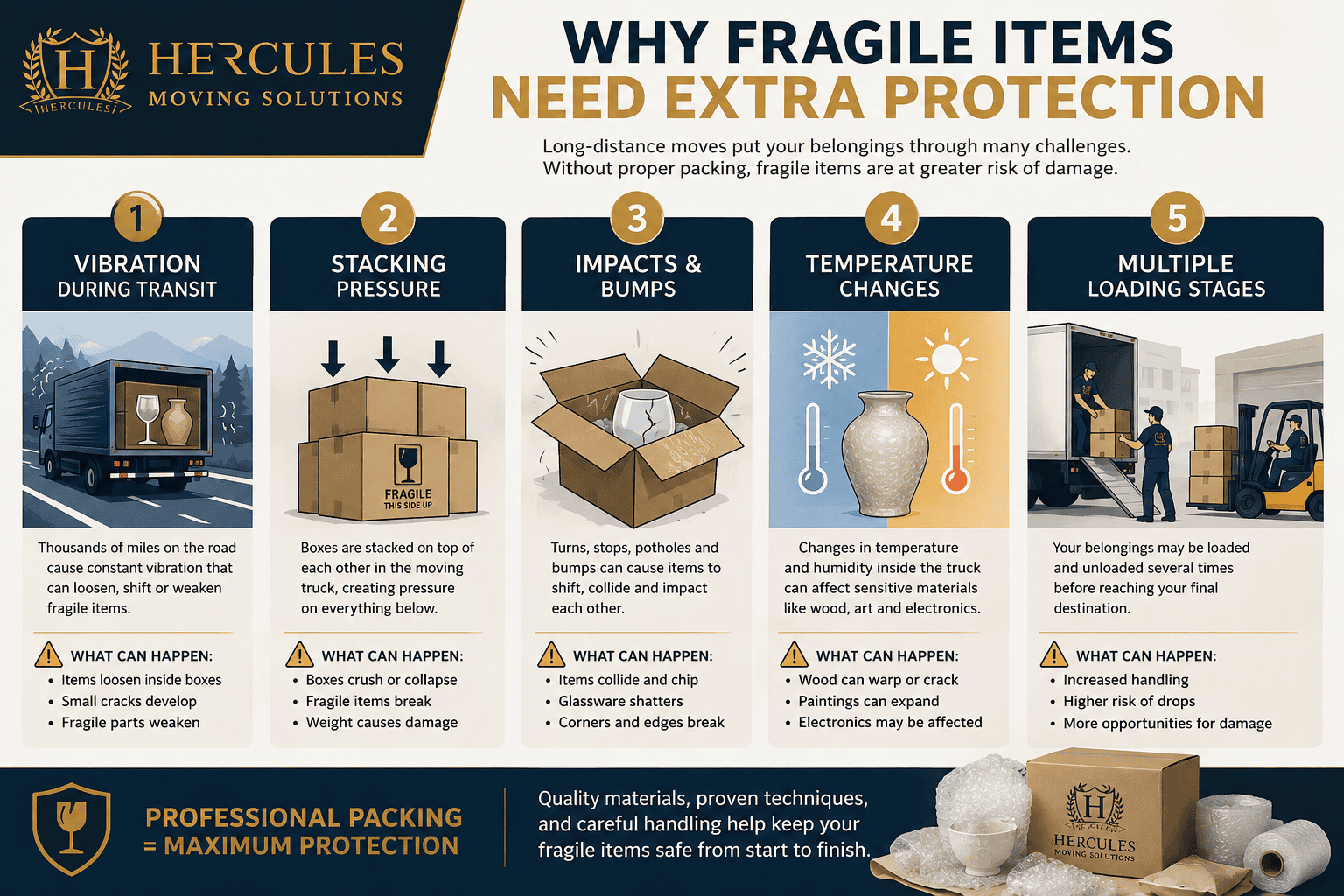
Unlike local moves that may only take a few hours, long-distance relocations expose your belongings to much more movement.
Boxes may remain inside the truck for several days, travel across different road conditions, and be handled multiple times before reaching your new home. Every additional mile increases the importance of proper packing.
That’s why moving fragile items long distance requires a completely different approach than packing for a short local move.
Long-distance transportation creates unique challenges
Even the most experienced movers can’t eliminate every bump in the road.
During interstate transportation, your belongings may experience:
- Highway vibration
- Sudden braking
- Sharp turns
- Uneven road surfaces
- Multiple loading and unloading points
- Temperature fluctuations
- Changes in humidity
Items that seem sturdy inside your home may become vulnerable once they’re transported hundreds or thousands of miles.
Not all fragile items are obvious
Many homeowners immediately think about dishes and glassware.
In reality, many household belongings require specialized protection during a long-distance move.
Examples include:
- Framed artwork
- Mirrors
- Televisions
- Computer monitors
- Wine collections
- Marble tabletops
- Glass shelving
- Collectibles
- Sculptures
- Designer furniture
- Musical instruments
- Decorative lighting
Some of these items aren’t necessarily delicate during everyday use, but they become much more susceptible to damage while being transported.
The most common causes of moving damage
We’ve found that damage during long-distance moves usually isn’t caused by one major accident.
Instead, it’s often the result of several smaller issues that build up throughout the journey.
Common causes include:
| Risk | Why It Happens |
|---|---|
| Poor packing | Items shift inside the box during transit. |
| Incorrect box sizes | Heavy belongings crush weaker boxes. |
| Insufficient cushioning | Fragile surfaces absorb impacts directly. |
| Loose furniture components | Parts move and rub together during transportation. |
| Improper loading | Weight from heavier items damages lighter belongings. |
| Weak packing materials | Boxes collapse after extended travel. |
Many of these problems can be prevented before the truck ever leaves your driveway.
Planning begins before packing
Protecting valuable belongings starts with identifying them early.
Before moving day, create a list of items that require additional care.
This may include:
- Family heirlooms
- Antique furniture
- Fine art
- Crystal collections
- High-end electronics
- Rare books
- Collectibles
- Handmade furniture
- Musical instruments
- Luxury décor
Separating these items from the rest of your household inventory makes it easier to determine which belongings need specialized packing or custom crating.
Should every fragile item go on the moving truck?
Not necessarily.
Some belongings are simply too valuable or too difficult to replace.
Important documents, irreplaceable family photographs, passports, prescription medications, personal electronics, and sentimental keepsakes are often safest when transported with you rather than loaded onto the moving truck.
The fewer irreplaceable items you entrust to transportation, the greater your peace of mind during the move.
Custom Crating for Artwork, Mirrors & Antiques
Some belongings need more protection than even the strongest moving box can provide.
Large mirrors, original artwork, antique furniture, sculptures, and valuable collectibles often require custom crating designed specifically for their size, shape, and fragility.
If you’re wondering how to move antiques long distance, custom crating is one of the most effective ways to protect valuable possessions during interstate transportation.
What is custom crating?
Custom crating involves building a wooden container specifically sized for a particular item.
Unlike standard moving boxes, a crate helps:
- Minimize movement
- Protect delicate surfaces
- Reduce pressure from stacked items
- Absorb impacts during transportation
- Provide additional structural support
Because every crate is built around the dimensions of the item inside, there’s less empty space where movement can occur.
Items commonly protected with custom crates
Professional movers often recommend crating for:
- Oil paintings
- Framed artwork
- Antique mirrors
- Marble furniture
- Glass tabletops
- Sculptures
- Fine antiques
- Large collectibles
- Chandeliers
- High-value décor
- Museum-quality pieces
These belongings often have irregular shapes or delicate finishes that make standard packing methods less effective.
When is custom crating worth the investment?
Not every fragile item requires a crate.
However, custom crating is often recommended if the item:
- Has significant financial value
- Cannot be replaced
- Has sentimental importance
- Contains fragile glass components
- Features carved wood or decorative finishes
- Is unusually large or heavy
- Has already undergone previous restoration
We’ve seen many homeowners choose custom crating for family heirlooms because protecting a one-of-a-kind item is often worth far more than the additional packing cost.
Preparing antiques before moving day
Before your movers arrive, consider taking a few extra steps to document valuable belongings.
You may want to:
- Photograph each item from multiple angles.
- Record existing scratches or imperfections.
- Save receipts or appraisals if available.
- Remove detachable components.
- Secure drawers and doors.
- Store small hardware in labeled bags.
These simple preparations help create a detailed record of each item’s condition before transportation begins.
Professional handling matters
Packing materials are only part of the equation.
Experienced movers also understand how to lift, position, load, and secure fragile belongings inside the truck to minimize unnecessary movement during transit.
This combination of careful handling and proper protection provides significantly better results than relying on standard household packing supplies alone.
If your move includes valuable artwork, antiques, or other specialty belongings, our Packing Services and Specialty Item Moving solutions can help ensure these items receive the additional protection they deserve. For a complete relocation plan, you can also explore our Long Distance Movers and Interstate Moving Services pages.
Helpful external resources:
- The FMCSA Ready to Move Guide offers practical advice for planning an interstate move and understanding your rights as a consumer.
- The FMCSA Protect Your Move resources explain valuation coverage, mover responsibilities, and what to expect during an interstate relocation.
How Professional Movers Pack and Protect Fragile Items
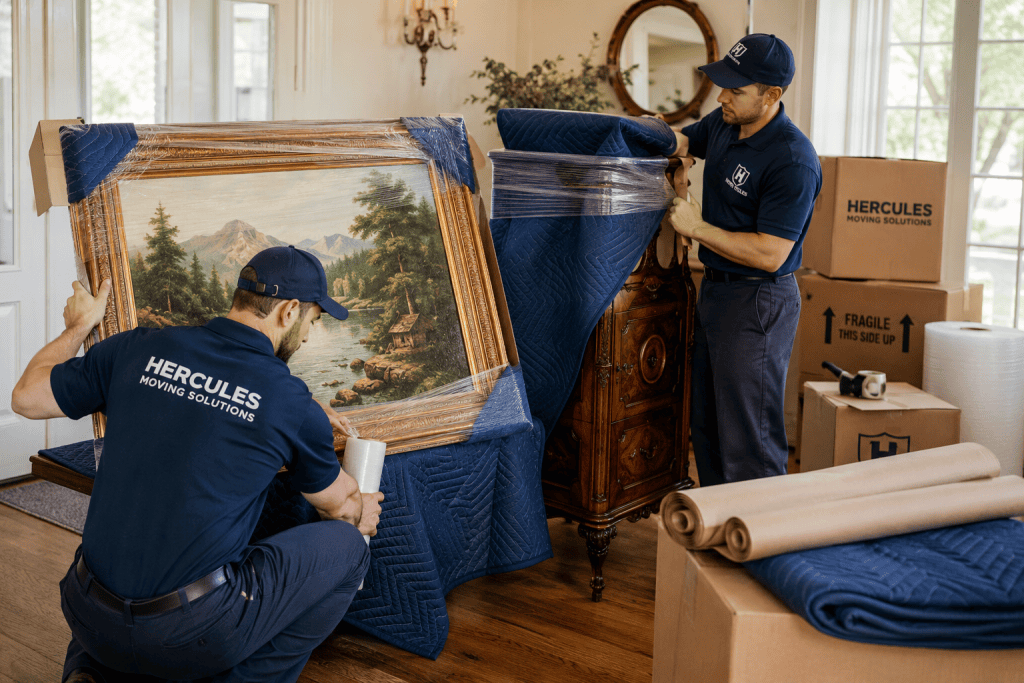
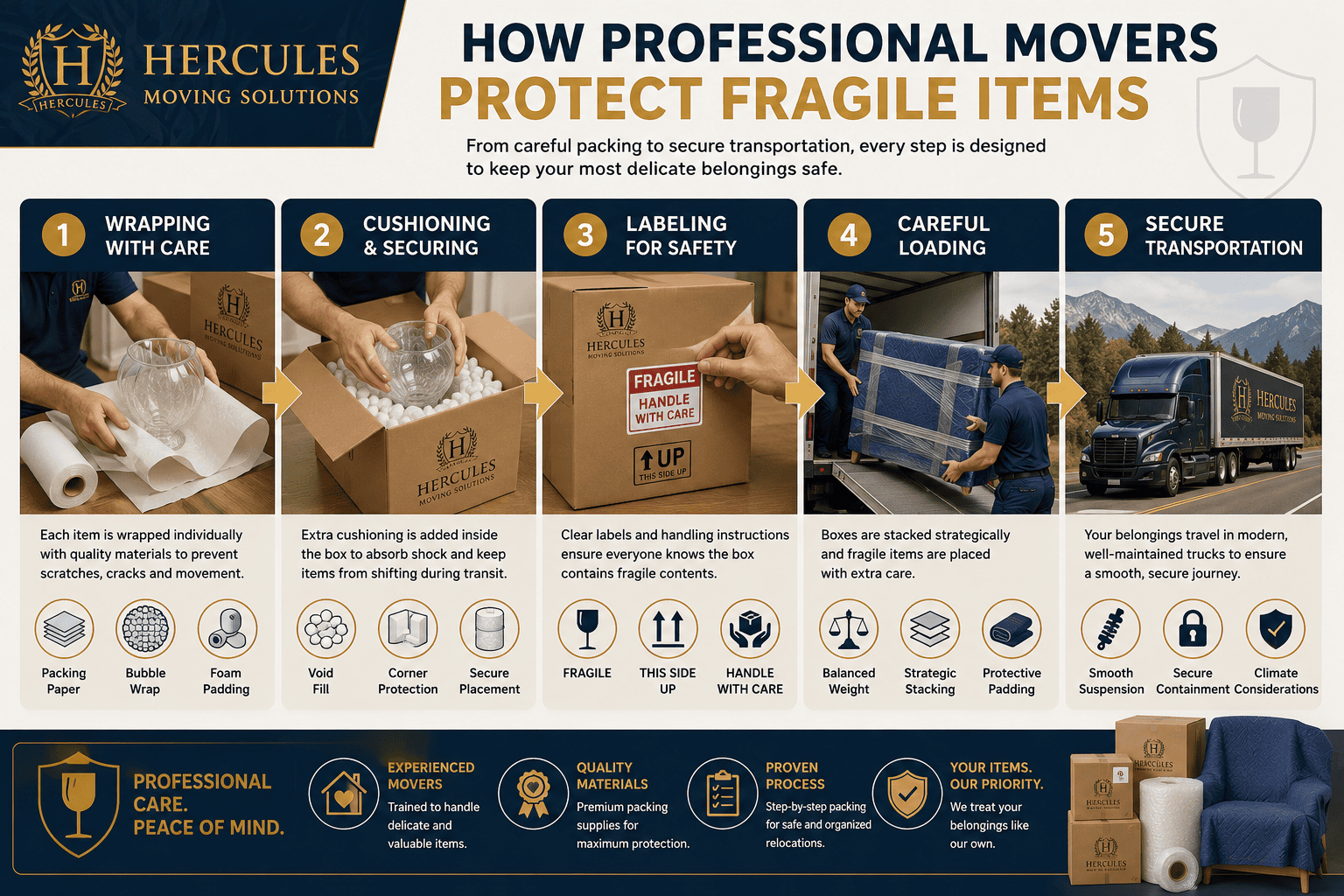
Professional packing involves much more than wrapping items in bubble wrap and placing them inside a box. Every fragile belonging has different vulnerabilities, which means it also requires a different packing strategy.
Experienced movers evaluate an item’s size, weight, material, shape, and value before deciding how it should be packed. A glass coffee table, for example, requires a completely different approach than a crystal chandelier or a vintage record collection.
If you’re shipping fragile items cross country, the goal isn’t simply to protect your belongings during loading. It’s to keep them secure throughout hundreds or even thousands of miles of transportation.
It starts with choosing the right packing materials
Professional movers don’t rely on a single type of box or wrapping material.
Instead, they select supplies based on what each item needs.
Common packing materials include:
- Double-wall moving boxes
- Dish pack cartons
- Mirror and picture boxes
- Furniture blankets
- Packing paper
- Bubble wrap
- Foam sheets
- Stretch wrap
- Corner protectors
- Mattress bags
- Custom wooden crates
- Heavy-duty packing tape
Using the right combination of materials helps reduce movement inside the box while protecting surfaces from scratches, dents, and impacts.
Every fragile item is packed differently
One of the biggest misconceptions about packing is that everything should be wrapped the same way.
Professional movers adjust their approach depending on the item.
For example:
| Item | Professional Packing Approach |
|---|---|
| Wine glasses | Wrapped individually and packed upright with dividers |
| Dinner plates | Packed vertically with cushioning between each plate |
| Mirrors | Protected with corner guards and mirror cartons |
| Televisions | Secured inside specialty TV boxes with foam padding |
| Artwork | Wrapped in packing paper, padded, and often custom crated |
| Lamps | Bases and shades packed separately to prevent damage |
Using the proper method for each item helps reduce unnecessary pressure during transportation.
Weight distribution matters
Packing isn’t only about protecting fragile items.
It’s also about balancing weight correctly.
Boxes that are too heavy become difficult to lift and are more likely to fail during transportation.
Professional packers typically:
- Place heavier belongings at the bottom.
- Use smaller boxes for dense items.
- Keep weight evenly distributed.
- Fill empty spaces to prevent shifting.
- Avoid overpacking cartons.
These techniques make loading safer while protecting the contents inside each box.
Labeling improves handling
Clear labeling isn’t just helpful when unpacking.
It also helps movers understand how each box should be handled.
Boxes are commonly labeled with information such as:
- Fragile
- Glass
- This Side Up
- Kitchen
- Master Bedroom
- Heavy
- Do Not Stack
- Open First
These labels help create a more organized loading process and reduce unnecessary handling during the move.
Protecting furniture during transportation
Large furniture often requires just as much attention as smaller fragile belongings.
Professional crews typically protect furniture by:
- Wrapping upholstered pieces with stretch wrap
- Covering wood furniture with moving blankets
- Padding corners and edges
- Removing detachable legs and shelves
- Securing hardware in labeled bags
These extra steps help preserve finishes and reduce the chance of scratches while furniture is transported over long distances.
How to Pack Electronics for a Long Distance Move
Electronics have become some of the most valuable items in today’s homes.
Between televisions, desktop computers, gaming systems, smart home devices, tablets, and home office equipment, many families transport thousands of dollars’ worth of electronics during a move.
Unlike furniture, electronics can be damaged by both physical impacts and environmental conditions, making careful preparation especially important.
Whenever possible, use the original packaging
Manufacturers design original boxes to protect electronics during shipping.
If you’ve kept the original packaging for items such as:
- Televisions
- Computer monitors
- Desktop computers
- Gaming consoles
- Speakers
- Printers
it’s often the safest option for transportation.
If the original packaging isn’t available, specialty moving boxes with foam inserts provide excellent alternatives.
Prepare electronics before packing
Before disconnecting devices, take time to organize everything.
Professional movers often recommend:
- Backing up important files
- Photographing cable connections
- Labeling power cords
- Removing batteries when appropriate
- Ejecting discs from media players
- Disconnecting external accessories
These simple steps make reconnecting your equipment much easier after the move.
Keep accessories organized
Small accessories are easy to misplace during relocation.
Store items such as:
- Power cords
- Chargers
- HDMI cables
- Remote controls
- Computer mice
- Keyboards
- Adapters
inside labeled bags or small containers that stay with their corresponding device.
Protect against moisture and temperature changes
Long-distance transportation may expose electronics to changing weather conditions.
Although moving trucks help protect your belongings, sensitive electronics should never be packed while they’re still warm after use.
Allow computers, televisions, and gaming systems to cool before packing.
Using moisture-resistant packing materials and avoiding excessive humidity during storage also helps protect delicate internal components.
Home office equipment deserves extra attention
Remote work has made home offices more valuable than ever.
If you’re relocating your workspace, remember to protect:
- Laptops
- External monitors
- Desktop towers
- Printers
- Hard drives
- Routers
- Networking equipment
- Backup drives
Organizing these items separately allows you to restore your workspace more quickly after arriving at your new home.
High-Value Items That Require Special Handling
Every home contains belongings that would be expensive, difficult, or impossible to replace.
Some have significant financial value.
Others carry decades of family history.
When moving valuables interstate, these possessions deserve additional planning long before moving day arrives.
Common high-value household belongings include:
- Fine art
- Antiques
- Jewelry collections
- Luxury watches
- Designer furniture
- Musical instruments
- Rare books
- Collectible coins
- Wine collections
- Family heirlooms
- High-end electronics
- Designer handbags
Each category presents different transportation challenges.
For example, artwork is sensitive to impacts, while antiques may be vulnerable to changes in humidity or improper lifting techniques.
Document valuable belongings before moving
Creating an inventory is one of the smartest steps you can take before a long-distance relocation.
Consider documenting:
- Current condition
- Serial numbers
- Model information
- Purchase receipts
- Professional appraisals
- High-resolution photographs
Having this information available provides additional documentation should you ever need to reference an item’s condition.
Know which valuables should stay with you
Not every valuable item belongs on a moving truck.
Many moving professionals recommend personally transporting:
- Passports
- Birth certificates
- Social Security cards
- Financial records
- Prescription medications
- Family photographs
- Small jewelry collections
- Laptop computers
- Portable hard drives
- Personal firearms (subject to applicable laws and carrier policies)
Keeping these essentials with you reduces risk and ensures they’re immediately available after arriving at your destination.
Don’t forget sentimental value
Some of the most valuable belongings aren’t expensive at all.
Children’s artwork, handwritten letters, wedding albums, family scrapbooks, and inherited keepsakes often can’t be replaced regardless of their financial worth.
These items deserve the same careful planning as any expensive collectible.
Piano and Large Instrument Moving
Moving a piano is one of the most specialized tasks involved in a household relocation.
Pianos combine exceptional weight with delicate internal mechanisms, making them particularly vulnerable during transportation.
Even a minor impact can affect:
- Sound quality
- Internal alignment
- Keys
- Pedals
- Exterior finish
Professional movers use specialized equipment and coordinated lifting techniques to transport these instruments safely.
Different instruments require different handling
Pianos aren’t the only musical instruments that benefit from specialized preparation.
Professional movers frequently relocate:
- Upright pianos
- Baby grand pianos
- Grand pianos
- Harps
- Drum sets
- Cellos
- Double basses
- Guitars
- Electronic keyboards
Each instrument requires different packing materials depending on its size, shape, and construction.
Preparing instruments before moving
Before transportation, many owners choose to:
- Clean the instrument.
- Remove loose accessories.
- Secure lids and covers.
- Photograph the current condition.
- Store sheet music separately.
- Protect cases from moisture.
These simple preparations help reduce unnecessary risks during transportation.
Climate considerations
Wooden instruments naturally expand and contract with changes in temperature and humidity.
Although these changes are usually temporary, minimizing exposure to extreme conditions during long-distance transportation helps preserve both structural integrity and performance.
For particularly valuable instruments, discuss any special handling requirements before moving day so the appropriate transportation and packing methods can be arranged.
If your move includes artwork, antiques, pianos, or other specialty belongings, our Specialty Item Moving and Packing Services solutions can help provide the additional protection these items require.
Insurance Options for Fragile and High-Value Items
Even with careful planning and professional packing, it’s important to understand how your belongings are protected during a long-distance move.
Many homeowners assume every item is automatically insured for its full value. In reality, interstate moving companies offer different levels of valuation coverage, and understanding the differences before moving day can help you make informed decisions about protecting your possessions.
If you’re moving valuables interstate, reviewing your coverage options should be part of your moving checklist, especially if you own antiques, artwork, electronics, collectibles, or designer furniture.
Start by documenting valuable belongings
Before your move begins, create a detailed inventory of high-value items.
This documentation can make it easier to verify the condition and value of your belongings before transportation.
Consider including:
- Clear photographs from multiple angles
- Purchase receipts
- Professional appraisals
- Serial numbers
- Model information
- Written descriptions of existing wear or damage
Keeping digital copies of this information in cloud storage provides easy access throughout your relocation.
Understand your valuation coverage options
Interstate movers are required to offer valuation coverage, but the level of protection varies depending on the option you choose.
Before making a decision, ask questions about:
- Coverage limits
- Deductibles
- Claims procedures
- Items requiring additional documentation
- Specialty item requirements
If you own exceptionally valuable belongings, you may also wish to discuss supplemental insurance options with your insurance provider.
Verify coverage before moving day
Rather than waiting until loading begins, review your paperwork well in advance.
Questions worth asking include:
- Which items require special documentation?
- Are antiques covered differently?
- Is custom crating recommended?
- Does existing homeowners insurance provide additional protection during relocation?
- Are there exclusions for certain valuables?
Clarifying these details early helps avoid surprises later.
Keep important records accessible
During your move, store documents related to valuable belongings somewhere you’ll be able to access them easily.
This may include:
- Moving contracts
- Inventory lists
- Appraisals
- Insurance documents
- Photographs
- Contact information
Keeping these records with you instead of on the moving truck provides additional peace of mind throughout your relocation.
Helpful resources from the Federal Motor Carrier Safety Administration (FMCSA) explain interstate consumer rights, valuation coverage, and the moving process in greater detail. Hercules Moving Solutions also encourages customers to review the FMCSA’s Ready to Move brochure before planning an interstate relocation.
Jewelry, Documents & Irreplaceables: What to Carry With You
Some belongings simply shouldn’t travel on the moving truck.
Even when working with experienced movers, there are certain items you’ll likely feel more comfortable transporting yourself.
These are usually items that are:
- Extremely valuable
- Difficult to replace
- Needed immediately after arrival
- Sensitive to temperature or security concerns
Items most homeowners carry personally
We typically recommend keeping the following with you whenever possible:
- Passports
- Birth certificates
- Social Security cards
- Marriage certificates
- Medical records
- Prescription medications
- Vehicle titles
- Financial documents
- Laptop computers
- External hard drives
- Jewelry
- Cash
- Family photographs
- Personal keepsakes
Having these essentials readily available also makes settling into your new home much easier.
Prepare a personal essentials bag
In addition to important documents, consider packing a separate overnight bag containing:
- A few days of clothing
- Toiletries
- Phone chargers
- Basic medications
- Children’s necessities
- Pet supplies
- Snacks
- Water
- Keys
- Wallet
If weather or transportation delays occur, you’ll still have access to your most important belongings.
What to Pack Yourself vs Trust to Long Distance Movers
Packing everything yourself isn’t always the safest option.
Likewise, professional movers don’t necessarily need to pack every item in your home.
A balanced approach often provides the best combination of protection, convenience, and cost efficiency.
Consider professional packing for:
- Fine china
- Crystal
- Artwork
- Mirrors
- Televisions
- Large electronics
- Antique furniture
- Sculptures
- Musical instruments
- Glass tabletops
- Fragile collectibles
These belongings often benefit from specialized materials, custom crating, or advanced packing techniques developed specifically for long-distance transportation.
Consider packing yourself:
- Clothing
- Towels
- Linens
- Books
- Toys
- Pantry items
- Decorative pillows
- Non-breakable household goods
These items are generally easier to organize and pack without specialized equipment.
A hybrid packing approach works well for many families
We’ve found that many homeowners choose to:
- Pack everyday household items themselves.
- Hire professionals for fragile belongings.
- Personally transport irreplaceable valuables.
- Use specialty crating for antiques or artwork.
This approach allows you to remain involved while still giving your most valuable possessions the additional protection they deserve.
| Pack Yourself | Professional Packing |
|---|---|
| Clothing | Fine art |
| Bedding | Mirrors |
| Books | Antiques |
| Towels | Electronics |
| Pantry items | Crystal |
| Toys | Large televisions |
| Decorative pillows | Musical instruments |
| Bathroom supplies | Glass furniture |
Full Value Protection vs Released Value Coverage
One of the most important decisions during an interstate move involves choosing your valuation coverage.
Although these terms sound similar, they provide different levels of protection.
Released Value Coverage
Released Value Protection is the basic valuation option that interstate movers must offer at no additional charge.
This option provides limited reimbursement based on the weight of an item rather than its replacement cost.
Because of these limitations, many homeowners choose additional protection for valuable belongings.
Full Value Protection
Full Value Protection offers a higher level of coverage.
Under this option, if an item covered by the agreement is lost or damaged, the mover may repair the item, replace it with a comparable item, or provide compensation according to the terms of the valuation agreement.
Coverage details, deductibles, and exclusions vary, so it’s important to review your moving documents carefully.
Which option is right for you?
The answer depends on what you’re moving.
If your household contains:
- Valuable antiques
- Designer furniture
- Fine art
- High-end electronics
- Collectibles
- Family heirlooms
many homeowners find additional protection worthwhile.
Before selecting coverage, ask your moving coordinator to explain the available options so you understand exactly how your belongings are protected during transit.
Protect Your Valuables with Hercules Moving Solutions
Fragile and high-value belongings deserve more than standard packing.
Whether you’re relocating priceless family heirlooms, valuable artwork, electronics, antiques, or specialty furniture, careful planning and professional packing can make a significant difference during a long-distance move.
At Hercules Moving Solutions, we coordinate nationwide relocations through a trusted network of experienced moving carriers who understand the specialized care delicate belongings require. From custom crating to full-service packing, we’ll help you create a moving plan that prioritizes the protection of everything that matters most.
Contact Hercules Moving Solutions today for a free moving quote and learn how professional packing and specialty moving services can help protect your valuables from pickup through delivery.
Frequently Asked Questions
Will long-distance movers pack my fragile items for me?
Yes. Many long-distance movers offer professional packing services for fragile belongings such as artwork, glassware, antiques, electronics, mirrors, and collectibles.
How do I insure my valuables during a long-distance move?
Review the valuation coverage offered by your mover and consider additional insurance if you own particularly valuable or irreplaceable items. Documenting your belongings before the move is also recommended.
What is the safest way to move antiques cross country?
Professional packing, custom crating when appropriate, careful loading, and choosing experienced long-distance movers are among the safest ways to transport antiques across the country.
Can movers transport a piano long distance?
Yes. Professional movers can coordinate long-distance piano transportation using specialized equipment, protective materials, and trained handling techniques.
What happens if fragile items are damaged in transit?
The claims process depends on the valuation coverage selected before your move. Review your moving agreement carefully to understand how claims are handled and what documentation may be required.
Should I transport jewelry myself?
In most cases, yes. Jewelry, important documents, medications, and small irreplaceable valuables are generally safest when carried with you.
Is custom crating necessary for artwork?
Not every piece requires custom crating, but it is often recommended for valuable artwork, oversized mirrors, antiques, sculptures, and other delicate items that need additional structural protection.
Can I pack fragile items myself?
You can, but professional packing materials and techniques often provide greater protection for belongings traveling long distances.
How early should I plan for specialty item moving?
Begin planning several weeks before your move, especially if custom crating, specialty equipment, or additional valuation coverage will be required.
Are electronics safe to transport on a moving truck?
Yes, when they are properly packed using appropriate materials, secured inside the truck, and protected from unnecessary movement during transit.