

Best Long Distance Moving Services to Hawaii
By Hercules Moving Solutions Editorial Team · Updated 2026-08-19 Choosing the best long-distance moving services to Hawaii requires more than comparing the lowest quote. A
Our company is currently experiencing technical difficulties with our phone lines.
Please contact us via support@herculesmovingsolutions.com
Licensed Moving Broker
Licensed Moving Broker
Relocating a business is very different from moving a home. Every hour your operations are interrupted can affect productivity, customer service, employee efficiency, and revenue. Whether you're moving a small office, expanding into a larger facility, or relocating multiple locations across state lines, careful planning is essential to keep your business running smoothly.
Commercial relocations involve much more than transporting office furniture.
Every business depends on equipment, technology, confidential records, inventory, and carefully planned workflows. A poorly organized move can create unnecessary downtime, disrupt employee productivity, delay customer service, and increase operational costs.
That’s why hiring experienced commercial moving specialists is one of the most important decisions you’ll make during a business relocation.
Unlike residential moves, commercial projects often involve:
Each item requires its own handling procedures, packing methods, and transportation strategy.
Our role begins long before moving day.
We work with you to understand your business operations, timeline, and priorities before matching your project with a qualified carrier capable of handling your specific relocation requirements.
One of the biggest mistakes businesses make is assuming an office move works like a residential move.
We’ve seen companies wait until the final weeks before relocating, only to discover they still need to:
Starting early gives your team more flexibility and significantly reduces moving-day stress.
Every department depends on another.
For example:
| Business Area | Why It Matters During a Move |
|---|---|
| IT | Computers, servers, phones, and internet must be operational quickly. |
| Human Resources | Employees need updated workspaces and clear communication. |
| Operations | Workflow interruptions should be minimized. |
| Customer Service | Business continuity protects customer relationships. |
| Facilities | Furniture placement, access, and building coordination require planning. |
| Executive Team | Project timelines and budgets must stay on schedule. |
Rather than treating every item the same, successful business relocation services prioritize what your company needs first after arrival.
For many businesses, reopening quickly is far more valuable than simply completing the move.
That means identifying:
before the first box is packed.
One of the biggest differences between residential and commercial moving is the number of stakeholders involved.
A business relocation may require coordination between:
Keeping everyone informed helps avoid delays, duplicate work, and last-minute scheduling conflicts.
At Hercules Moving Solutions, we believe the best commercial relocations begin with a clear plan that every decision-maker understands.
Technology is often the most valuable and business-critical part of an office relocation.
For many companies, computers and servers aren’t just equipment. They’re the foundation of daily operations. Extended downtime can interrupt communication, delay projects, affect customer support, and reduce productivity across the entire organization.
Moving IT infrastructure requires significantly more planning than transporting standard office furniture.
Professional commercial movers work alongside your internal IT team or third-party technology providers to help coordinate a smooth transition.
Every organization has different technology requirements.
Some businesses shut down completely during relocation, while others maintain partial operations throughout the move.
We’ve found that companies investing time in IT preparation often experience a much faster recovery after moving day.
Technology isn’t the only concern.
Many businesses also relocate confidential materials such as:
Maintaining organization throughout the move helps reduce the risk of misplaced documents while making the unpacking process significantly more efficient.
One of the first questions we ask commercial clients is:
“What absolutely needs to be operational on your first business day?”
The answer shapes the entire relocation strategy.
For some companies, it’s customer support.
For others, it’s accounting systems, warehouse operations, healthcare equipment, or production workflows.
By identifying these priorities early, your moving plan can focus on restoring the most important systems first instead of treating every piece of equipment equally.
This strategic approach helps businesses reopen faster and keeps downtime to a minimum.
If your company is relocating to another state, our Interstate Moving Services page explains how long-distance commercial relocations are coordinated across the country. Businesses planning larger relocations can also learn more about our Long Distance Movers to better understand available service options.
At Hercules Moving Solution, we offer comprehensive corporate packing and unpacking solutions to accommodate all your needs during a move or transition. Our packing materials and techniques are perfect for both short-term and long-term storage, ensuring your belongings remain in pristine condition. As a full-service moving company, our licensed and insured movers provide expert packing services along with our storage solutions.
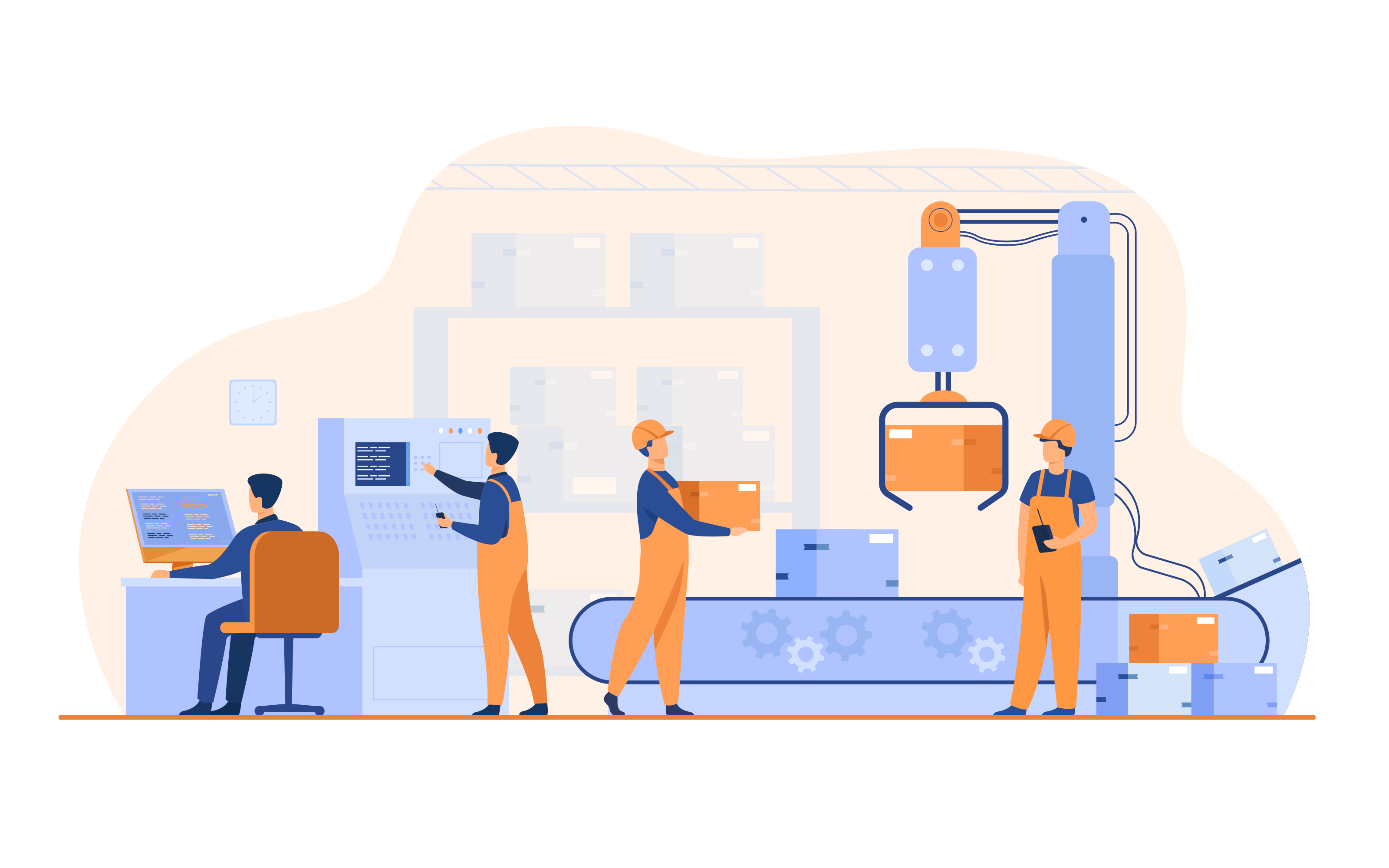
Commercial
As part of our commercial moving solutions, we also provide assistance with arranging large and heavy furniture, installing office equipment, mounting monitors & TVs, and other related tasks. No matter the size or weight, we are the muscle you need!
Get a Free Quote
The timeline depends on your office size, distance, equipment, and relocation complexity. Smaller offices may relocate within a day, while larger corporate or multi-location projects often require several days or weeks of planning and phased execution.
Yes. Careful planning, department prioritization, phased scheduling, and after-hours relocation strategies help reduce interruptions and allow businesses to resume operations more quickly.
Commercial relocations often include specialized handling for computers, servers, networking equipment, and other technology. Planning with your IT team before moving day helps ensure systems can be restored efficiently.
Many commercial relocations are scheduled during evenings, weekends, or holidays to reduce disruption to employees and customers.
Yes. Hercules Moving Solutions coordinates nationwide business relocations through its carrier network, including multi-location office moves and interstate commercial relocations.
For larger office moves, beginning the planning process at least eight to twelve weeks in advance provides greater scheduling flexibility and allows time to coordinate vendors, building management, and internal departments.
Commercial moving services are commonly used by corporate offices, law firms, healthcare practices, financial institutions, educational organizations, retail businesses, warehouses, and government agencies.
Professional packing services can help protect office furniture, electronics, confidential files, artwork, and specialized business equipment while improving organization throughout the relocation.
Yes. Temporary storage is often used when renovation projects, lease timing, or phased relocations create a delay between moving out and occupying the new facility.
Communicate early, assign department coordinators, label workstations clearly, provide updated office layouts, and share relocation timelines so employees know what to expect before moving day.





Our Customers Love Us
Are you planning to move to a new home or office soon?
Let Hercules Moving Service take care of all your moving needs!
GOOD
Advice from Trusted Movers
Are you planning to move to a new home or office soon? Let Hercules Moving Service take care of all your moving needs! Our team of experienced movers is dedicated to making your move as stress-free and efficient as possible.
By Hercules Moving Solutions Editorial Team · Updated 2026-08-19 Choosing the best long-distance moving services to Hawaii requires more than comparing the lowest quote. A
By Hercules Moving Solutions Editorial Team · Updated 2026-08-19 Preparing for a Hawaii relocation requires more planning than a typical mainland move. The distance, ocean
A long-distance move is more than transporting boxes from one address to another. When relocating across state lines, families and businesses need a moving company
DOT: 3497836 – MC: 1153414
Please note that a properly licensed interstate broker, such as Hercules Moving Solutions, is not a motor carrier and will not transport an individual shipper’s household goods, but will coordinate and arrange for the transportation of household goods by an FMCSA authorized motor carrier, whose charges will be determined by its published tariff. All estimated charges and final actual charges will be based upon the carrier’s tariff which is available for inspection from the carrier upon reasonable request. (*) 70% OFF on Tariff Rates.